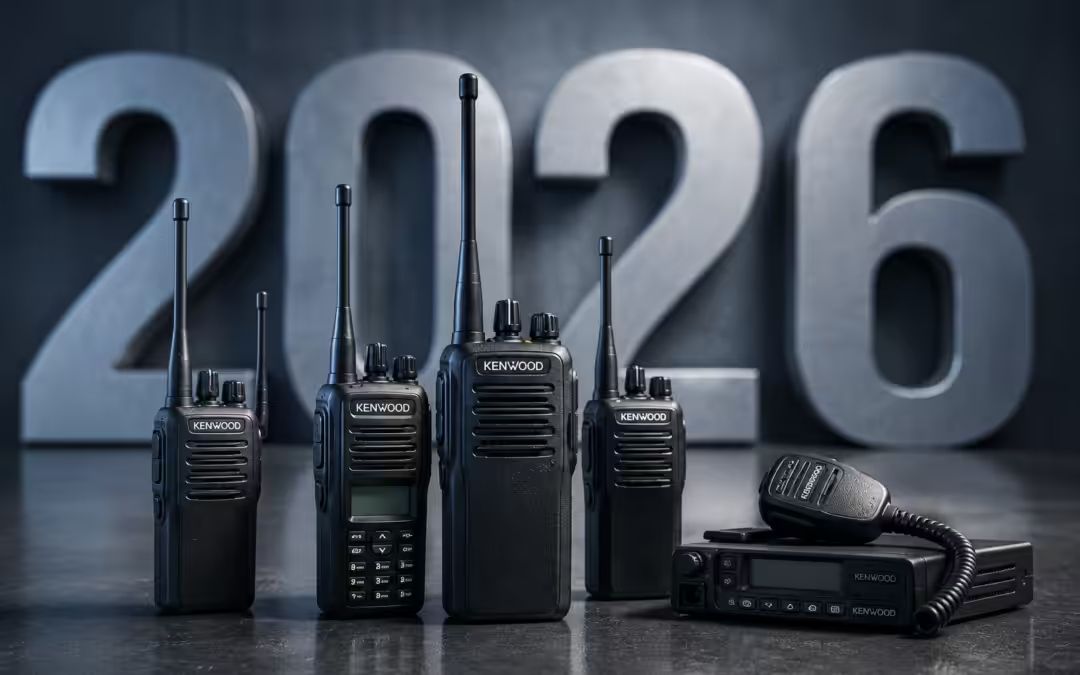
Two-Way Radio Hire: What Businesses Need to Know in 2026
Two-way radio hire remains a practical communication solution for businesses that need reliable, instant contact between teams. From construction sites and warehouses to events, transport operations, security teams and facilities management, professional radios provide fast communication without relying on mobile phones.
In 2026, businesses have more options than ever when choosing a radio hire solution. Traditional digital two-way radios, DMR systems, Push-to-Talk over Cellular (PoC)Push-to-Talk over Cellular (PoC) provides radio-style push-to-talk communication over cellular or IP networks, allowing users to communicate across wide areas where suitable network connectivity is available. radios and hybrid communicationHybrid Communication combines two or more communication technologies, such as two-way radio, DMR, cellular, Wi-Fi or IP networks, allowing different systems or users to communicate through a common platform. solutions can all provide different advantages depending on the size, location and requirements of an operation.
Why Hire Two-Way Radios?
Hiring two-way radios allows businesses to access professional communication equipment without the upfront cost of purchasing a complete fleet. This can be particularly useful for temporary projects, events, seasonal operations, short-term contracts and businesses that need additional radios during busy periods.
Radio hire can also include accessories such as earpieces, remote speaker microphones, batteries, chargers and carrying cases. For larger deployments, businesses may also require charging stations, repeaterA Repeater receives a two-way radio transmission and retransmits it, usually from an elevated location, to extend the coverage and reliability of a radio communication system. systems or dispatch and control solutions.
For many organisations, hiring provides a flexible way to scale communications without committing to equipment that may not be required all year round.
Who Uses Two-Way Radio Hire?
Professional two-way radio hire is used across a wide range of industries, including:
- Construction and civil engineering
- Warehousing and distribution
- Manufacturing and production
- Facilities management
- Security companies
- Events and festivals
- Traffic management
- Rail and transport infrastructureRadio infrastructure is the equipment and supporting systems behind a professional two-way radio network, including repeaters, antennas, base stations, network connections, power systems and dispatch equipment.
- Airports and aviation
- Ports and maritime operations
- Hospitality and leisure
- Retail and shopping centres
Each environment has different communication requirements. A warehouse may need clear communication between warehouse operatives and supervisors, while an event organiser may require hundreds of users to communicate across a large site.
Digital Two-Way Radios for Business
Modern professional radios are predominantly digital rather than analogue. Digital radio systems can provide clear voice communication, improved functionality and features designed for business use.
Depending on the equipment and networkA Network is a connected system of radios, equipment and infrastructure that allows users to communicate across a defined area. Radio networks can range from simple radio-to-radio systems to large multi-site networks., features can include individual calling, group calling, emergency alerts, lone workerA Lone Worker is someone who works without direct supervision or immediate assistance nearby. Compatible two-way radios can provide safety features such as timed check-ins, emergency alerts and GPS location. functionality, GPS location, text messaging and enhanced privacy or encryptionEncryption protects two-way radio communications by converting voice or data into a secure form that can only be understood by authorised radios with the correct encryption capability and keys. options.
Digital radio can also make it easier to organise users into different teams or communication groups. For example, a large event could have separate channels for security, operations, catering, production and management.
DMR Radio Hire
DMR, or Digital Mobile RadioA Mobile Radio is a two-way radio designed to be installed in a vehicle. It normally uses the vehicle's power supply and an external antenna to provide reliable communication while travelling or working in the field., is widely used for professional communication systems. DMR equipment can be suitable for organisations that need structured radio communications across a site or multiple locations.
DMR radio hire can include handheld radios, mobile radios, repeaters and other infrastructure depending on the required coverageRadio Coverage is the geographical area in which a two-way radio system can provide reliable communication. Coverage depends on the radios, antennas, frequency, terrain, buildings and system infrastructure..
A DMR system can be particularly useful where users need reliable communication across a large site, multiple buildingsAn antenna transmits and receives radio-frequency signals, allowing a two-way radio to communicate. Antenna type, frequency, height and location can all affect radio performance and coverage. or an operational area where direct radio-to-radio communication is not sufficient.
PoC Radio Hire
Push-to-talk over Cellular (PoC) radios provide another option for businesses that need wide-area communication.
PoC radios use cellular data networks rather than conventional radio frequencies. This means users can potentially communicate across much larger geographical areas without relying on a local radio repeater system.
For businesses operating across multiple sites, cities or regions, PoC radio hire can provide a practical way to connect teams that would otherwise be outside the coverage of a conventional radio systemA Radio System is a complete communication solution comprising two-way radios and, where required, equipment such as repeaters, antennas, base stations, mobile radios and network infrastructure..
Coverage is dependent on the available cellular network, so the locations where radios will be used should always be considered when selecting equipment.
Short-Term and Long-Term Radio Hire
The length of a hire period can vary considerably.
Short-term two-way radio hire is commonly used for events, festivals, construction projects, temporary security operations, sporting events and other time-limited activities.
Long-term radio hire can be more suitable for businesses that need a permanent communication solution but prefer to spread the cost of equipment over time or avoid purchasing and maintaining a fleet themselves.
A professional radio hire provider should be able to supply equipment based on the expected duration and operational requirements of the project.
How Many Radios Does a Business Need?
The number of radios required depends on how the organisation operates rather than simply how many employees it has.
Not every member of staff necessarily needs a radio. Instead, radios are often allocated to employees who need to communicate quickly while working away from a fixed location.
For example, a warehouse may provide radios to supervisors, goods-in teams, dispatch staff, forklift operators and management.
A radio hire provider can help determine the appropriate fleet size based on staffing levels, shifts, communication groups and the way teams operate.
Do Two-Way Radios Need a Licence?
Some professional two-way radio systems operate on licensed frequencies. Other systems, such as PMR446, operate under specific licence-exempt conditions.
The correct option depends on the equipment, frequencyAn antenna transmits and receives radio-frequency signals, allowing a two-way radio to communicate. Antenna type, frequency, height and location can all affect radio performance and coverage., powerAn antenna transmits and receives radio-frequency signals, allowing a two-way radio to communicate. Antenna type, frequency, height and location can all affect radio performance and coverage. level and intended use.
Businesses should not assume that every professional radio can simply be used without a licence. A reputable radio hire company should be able to advise on the licensing requirements for the proposed system and ensure that the equipment supplied is appropriate for the intended use.
Radio Hire for Large Sites and Multiple Locations
Large operations may require more than a fleet of handheld radios.
Where buildings, terrain or distance restrict direct radio communication, a repeater system can extend coverage and improve reliability.
For businesses operating from multiple warehouses, offices or operational locations, PoC or networked radio systems may provide a better solution.
Some modern communication systems can also connect different locations and teams into the same communication network. This can allow a central control room or management team to communicate with users across several sites.
What Should Businesses Look for When Hiring Radios?
When choosing a two-way radio hire provider, businesses should consider more than the cost per radio.
Important factors include:
- Required coverage area
- Number of users
- Indoor and outdoor use
- Number of buildings or sites
- Expected hire duration
- Digital or analogue requirements
- DMR or PoC requirements
- Licensing requirements
- Battery life
- Required accessories
- Emergency and lone worker features
- Technical support
- Equipment servicing and replacement
- Delivery and collection arrangements
The cheapest radio may not be the most suitable radio. Reliability, coverage and the ability to communicate effectively should be the main priorities.
Two-Way Radio Hire for Events
Events often require temporary communication networks that can be deployed quickly and removed after the event.
Professional radios allow event teams to communicate without relying on personal mobile phones. Separate groups can be created for security, stewards, production, medical teams, catering and event management.
For larger events, a radio system can also be designed around the venue and expected coverage requirements.
This makes two-way radio hire particularly useful for festivals, sporting events, conferences, exhibitions, concerts and temporary public events.
The Benefits of Hiring Professional Radios
For many businesses, the main advantages of radio hire include:
- Lower upfront costs
- Flexible hire periods
- Access to professional equipment
- Easy fleet expansion
- Equipment and accessories supplied together
- Technical support
- Reduced responsibility for equipment maintenance
- Suitable options for temporary and permanent operations
Hiring can also make it easier to test a communication system before committing to a purchase.
Choosing the Right Two-Way Radio Hire Solution in 2026
The best radio system depends on the way a business operates.
A small site may only require a straightforward fleet of handheld radios. A large industrial facility could require DMR radios and repeater infrastructure. A company operating across several regions may benefit from PoC radios or a hybrid communication system.
The important point is to select the technology around the communication requirement rather than choosing equipment based solely on the radio model.
A professional radio hire provider should assess the operating environment, coverage requirements, number of users and communication structure before recommending a system.
Conclusion
Two-way radio hire continues to provide businesses with a reliable and flexible way to connect teams in 2026. Professional radio systems can support everything from short-term events and construction projects to long-term business operations across multiple locations.
With digital radio, DMR, PoC and hybrid communication systems available, businesses can choose a solution that matches their coverage, workforce and operational requirements.
For organisations considering radio hire, the most important first step is to define where the radios will be used, how many people need access to them and how teams need to communicate. From there, the right equipment, coverage and licensing requirements can be established.
DCS 2 Way Radio provides professional two-way radio hire solutions for businesses across the UK, with equipment and communication options available for a wide range of industries and operational requirements.