How Two-Way Radios Improve Communication in Ports, Shipyards and on Ships
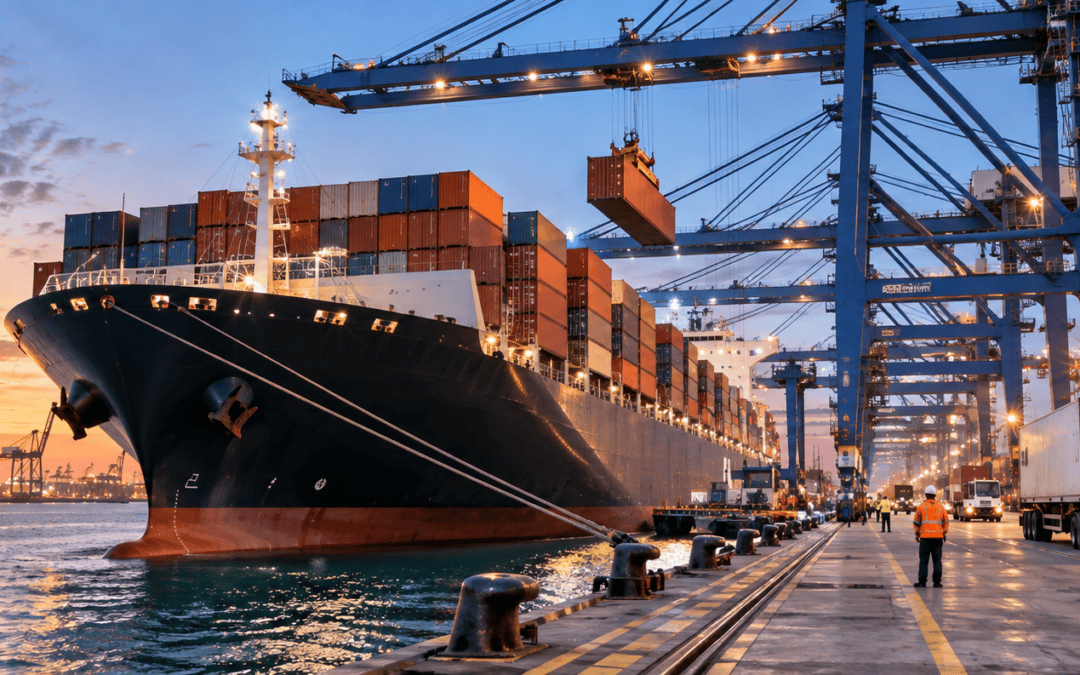
Ports, shipyards, docks and vessels are some of the most complex working environments in the transport and logistics sector. Ships arrive and depart around the clock, cargo is loaded and unloaded, cranes move containers weighing many tonnes, vehicles travel between quaysides and storage yards, and teams of workers may be spread across large areas.
In an environment where operations can involve hundreds of people, multiple vehicles and several separate work areas, effective communication is essential.
Two-way radios provide a simple way for workers to communicate instantly, whether they are onboard a vessel, working on the quayside, operating a crane, handling cargo or supervising activity across a busy terminal.
Unlike a conventional telephone conversation, professional radio systems are designed around operational communication. A worker can press the push-to-talk button and immediately speak to a colleague or an entire team, without dialling a number or waiting for a call to connect.
Modern digital radio systems can also provide features such as group calling, emergency alerts, lone-worker functions, GPS and wide-area communication. For organisations operating across multiple sites, Push-to-Talk over Cellular (PoC)Push-to-Talk over Cellular (PoC) provides radio-style push-to-talk communication over cellular or IP networks, allowing users to communicate across wide areas where suitable network connectivity is available. systems can extend communication beyond the range of a conventional local radio networkA Network is a connected system of radios, equipment and infrastructure that allows users to communicate across a defined area. Radio networks can range from simple radio-to-radio systems to large multi-site networks..
This article looks at how two-way radios are used across maritime environments, from ships and shipyards to dock workers, container terminals, marinas and wider port operations.
Why Two-Way Radios Can Be More Practical Than Mobile Phones
Mobile phones have an important role in modern business, but they are not always the most practical communication tool for teams working in ports, shipyards and maritime environments.
A mobile phone is primarily designed around individual communication. A worker normally needs to select a contact, initiate a call and wait for the other person to answer.
A Marine two-way radio works differently.
With a push-to-talk radio, the user presses a button and speaks. Depending on how the system is configured, that transmissionTransmission is the process of sending voice, data or signalling from a radio using a radio-frequency signal to another radio, repeater or communication system. can be heard immediately by an individual colleague, a specific workgroup or a much larger team.
Instant group communication
Consider a container terminal where a crane operator, banksman, cargo handlers and yard supervisor all need to coordinate the movement of a container.
Rather than making several separate telephone calls, the relevant workers can be assigned to the same radio talkgroup.
One transmission can therefore reach everyone who needs the information.
This can be particularly useful during:
- Cargo loading and unloading
- Crane operations
- Vessel turnaround
- Yard movements
- Maintenance work
- Ship refitting
- Quayside operations
- Vehicle movements
- Emergency situations
Communication while working
Professional radios are designed for operational environments where workers may need to communicate while carrying out physical tasks.
Two way radios can be attached to workwear, worn on a belt or used with compatible earpieces and speaker microphones. This means workers do not necessarily need to stop what they are doing to communicate.
For a dock worker, crane operators or marine engineer, being able to communicate using a dedicated push-to-talk control can be considerably more practical than handling a smartphone.
Rugged equipment for demanding environments
Ports and shipyards can expose equipment to water, dust, dirt, vibration, impacts and changing weather conditions.
Professional two-way radios are available in ruggedised designs intended for demanding working environments, with different levels of water and dust protection depending on the model.
For particularly demanding or hazardous environments, specialist intrinsically safe and ATEX-approved equipment may also be appropriate.
Radio systems do not all depend on the same infrastructure
A conventional radio systemA Radio System is a complete communication solution comprising two-way radios and, where required, equipment such as repeaters, antennas, base stations, mobile radios and network infrastructure. may allow users to communicate directly with each other over a defined area. Larger sites can use radio repeaters to extend coverageRadio Coverage is the geographical area in which a two-way radio system can provide reliable communication. Coverage depends on the radios, antennas, frequency, terrain, buildings and system infrastructure..
Other systems, including PoC radios, use cellular or data networks to provide communication over much larger geographical areas.
The important point is that the radio system should be selected around the environment in which it will be used rather than assuming that one type of equipment will suit every maritime operation.
Get a Quote for Maritime Two-Way Radios
Reliable communication is essential for safety across busy ports, ships and marine environments. Two-way radios give teams instant communication when coordinating vessels, cargo, cranes, vehicles and dockside operations. Talk to DCS 2 Way Radio today for a tailored quote and find the right radio communication solution for your marine or port operation.
Two-Way Radios for Ships and Vessel Crews
Communication onboard a ship can involve many different people performing different roles.
Depending on the vessel and operation, communication may be required between the bridge, deck crew, engineering teams, maintenance personnel and shore-based workers.
A professional vessel two-way radio system can provide dedicated communication between appropriate teams, helping workers coordinate activities without relying exclusively on mobile phones.
Onboard vessel communication
A vessel can contain multiple working areas separated by decks, machinery spaces, accommodation areas and other structures.
Crew members may need to communicate about:
- Maintenance
- Mooring operations
- Cargo handling
- Inspections
- Engineering work
- Deck operations
- Safety procedures
- Vessel movements
- Loading and unloading
A radio allows workers to communicate without physically travelling between locations.
Ship-to-shore communication
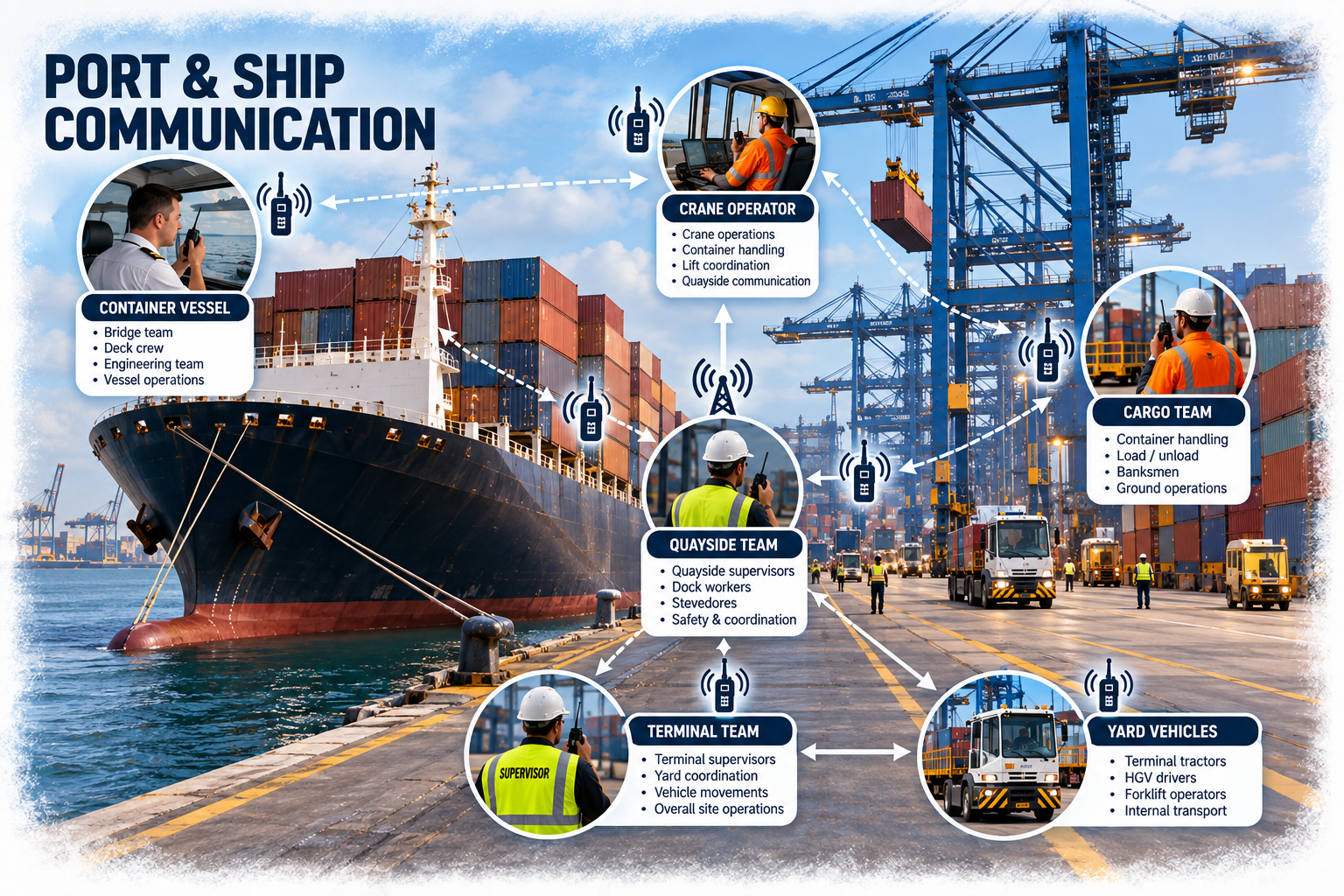
One of the most important applications is communication between a vessel and the teams working around it.
For example, when a container vessel is alongside a terminal, several different groups may be involved in the operation.
The precise communication arrangement will depend on the vessel, port and radio system, but the principle is the same: the people involved in an operation need a practical way to communicate with one another.
An important distinction: two-way radio and marine VHF
The term marine radio can refer to different types of communication equipment.
Marine VHF is specifically associated with maritime radio communication and operates using designated marine channels. Professional land-mobile radio systems, including DMR systems, are a different category and may be used for port, terminal, shipyard or operational communications.
The appropriate system depends on the operation, regulatory requirements, coverage requirements and the users who need to communicate.
Two-Way Radios for Shipyards and Dry Docks
Shipyards present a different communication challenge from a conventional office or warehouse.
A large shipyard may contain fabrication areas, workshops, storage areas, dry docks, cranes, vessels and temporary work zones.
During vessel construction, repair or refitting, multiple contractors and specialist teams may be working simultaneously.
Two-way radios can provide a shared communication system across these working environments.
Communication during vessel repair and refitting
A vessel undergoing maintenance may have marine engineers, electricians, fabricators, welders, mechanical teams, supervisors and contractors working in different areas.
A radio system can allow relevant teams to communicate without repeatedly leaving their work area to find a colleague.
Dry dock communication
Dry docks create particularly interesting communication requirements.
Workers can be positioned:
- Onboard the vessel
- Alongside the hull
- At the dock floor
- Around cranes
In workshops - Within engineering areas
- Around equipment and machinery
A radio system designed around the site's coverage requirements can help connect these teams.
Crane and lifting operations
Shipyards can involve substantial lifting operations.
Rather than targeting the generic term crane operator radios, maritime communications are better understood in context.
A shipyard crane operator may need to communicate with a banksman, lifting team, supervisor and workers around the vessel.
This makes shipyard crane communication and shipyard two-way radios more specific descriptions of the requirement.
Get a No-Obligation Quote from
DCS 2 Way Radio
Two-Way Radios for Dock Workers and Quayside Teams
Dock workers operate at the point where ships, cargo, vehicles and port infrastructureRadio infrastructure is the equipment and supporting systems behind a professional two-way radio network, including repeaters, antennas, base stations, network connections, power systems and dispatch equipment. meet.
The quayside can be a busy environment, with multiple activities taking place simultaneously.
Workers may include:
- Dock workers
- Quayside teams
- Cargo handlers
- Stevedores
- Banksmen
- Supervisors
- Vehicle operators
- Maintenance personnel
- Security teams
Each role can have different communication requirements.
Coordinating dockside operations
A supervisor may need to communicate with several members of a team at the same time.
A radio talkgroup can allow those workers to receive the same operational message without the supervisor having to contact each person individually.
This can be particularly useful when teams are spread along a quay or around a vessel.
Communication between workers and vehicle operators
Ports contain many moving vehicles.
Depending on the operation, these can include forklifts, terminal tractors, yard vehicles and other specialist equipment.
A radio can provide a direct communication channelA two-way radio channel is a programmed set of communication settings, typically including frequency and signalling, that allows compatible radios to communicate with one another. between workers on the ground and the people operating vehicles or machinery.
Banksman communication
Banksmen can play an important role in coordinating vehicle and lifting movements.
A professional radio with an appropriate audio accessoryAn audio accessory is an external device such as a speaker microphone, earpiece or headset that connects to a two-way radio to improve or adapt how users send and receive audio. can allow a banksman to communicate while maintaining attention on the operation.
The exact equipment required depends on the environment, noise levels, working practices and risk assessment.
Two-Way Radios for Ports and Container Terminals
Modern container terminals are highly coordinated environments.
A single vessel operation can involve:
- Ship crews
- Quayside workers
- Crane operators
- Cargo handlers
- Terminal supervisors
- Yard teams
- Vehicle operators
- Maintenance personnel
- Security teams
Communication therefore needs to work across several different operational groups.
Container ship operations
When a container ship is alongside, containers may be moved between the vessel and terminal using large quay cranes.
The movement of each container involves coordination between different parts of the operation.
A communication network might therefore connect relevant crane operators, ground teams, supervisors and cargo personnel.
Quay crane communication
A quay crane operator is not simply operating in isolation.
The wider operation can involve a crane team, banksman or ground personnel, terminal control and other workers in the surrounding area.
The radio system can therefore be configured around operational groups rather than simply providing every worker with an individual device.
Container yard operations
Once cargo leaves the quayside, it may be transferred into the terminal yard.
Here, communication can involve:
Different radio groups can be used for different operations, helping keep communications relevant to the people involved.
Port-wide communication
Large ports may cover substantial areas, potentially containing multiple terminals, warehouses, yards, maintenance facilities and access roads.
A direct radio system may be sufficient for some operations, while larger sites may require repeaters or wider-area radio infrastructure.
A site surveyA Site Survey is an assessment of a location to determine whether a two-way radio system will provide the required coverage, reliability and performance. can help identify the coverage requirements before equipment is specified.
Communication Between Ships, Cranes, Cargo Teams and Transport
One of the strongest advantages of radio communication in a maritime environment is that it can connect different parts of an operation.
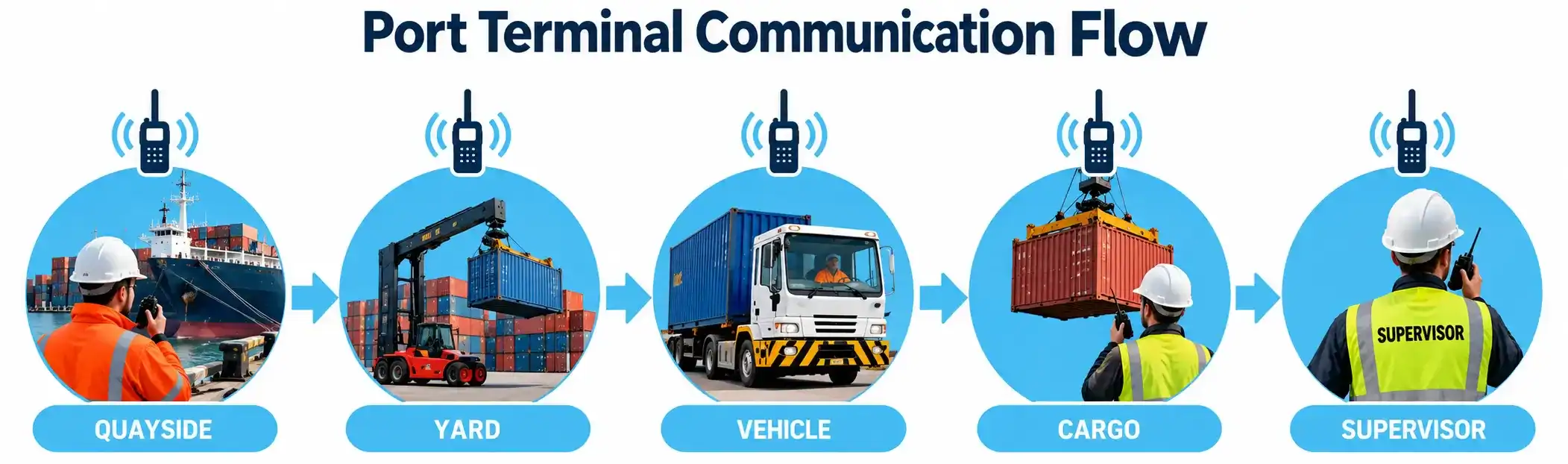
Consider the journey of a container:
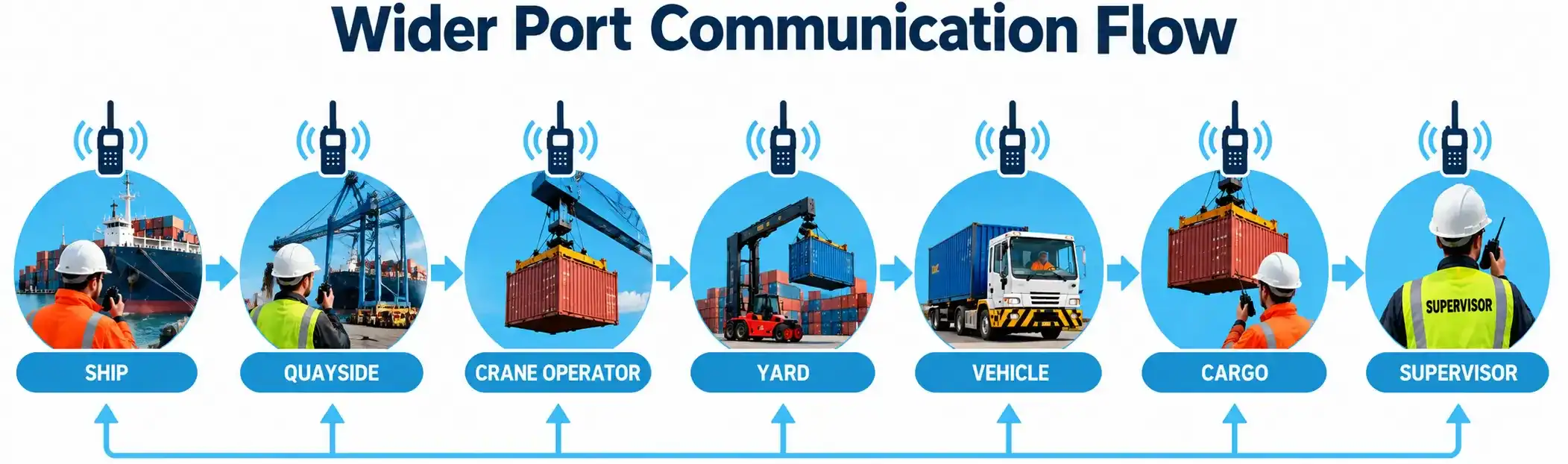
At different points in that journey, different workers may become responsible for the movement.
Communication needs to follow the operation.
A well-designed radio system can provide separate talkgroups for different operational functions while allowing authorised users to communicate across groups when required.
This can be particularly valuable in larger ports where hundreds of workers may be operating simultaneously.
Two-Way Radios for Yachts, Marinas and Boatyards
Commercial ports are not the only maritime environments where professional radio communication can be useful.
Marinas, yacht facilities and boatyards can also contain multiple teams working across vessels and shore-based facilities.
Users may include:
- Yacht crew
- Marina staff
- Harbour teams
- Boatbuilders
- Marine engineers
- Maintenance workers
- Boat yard teams
- Security personnel
Marina operations
Marina staff may need to communicate about vessel movements, berthing, maintenance and customer services.
A radio system can provide an immediate communication channel between teams working around the marina.
Yacht maintenance
Large yachts can require teams of engineers, technicians, contractors and maintenance personnel.
Communication can therefore be required between people onboard the yacht and colleagues working around the vessel.
Boatyards
A boatyard may combine workshops, storage areas, vessels, lifting equipment and vehicle movements.
Radios can provide a common communication system across these different working areas.
Get a No-Obligation Quote from
DCS 2 Way Radio
Choosing the Right Two-Way Radio System for Maritime Operations
There is no single radio system that is automatically right for every port, shipyard or vessel.
The appropriate solution depends on factors such as:
- The size of the site
- Number of radio users
- Required coverage
- Number of buildingsAn antenna transmits and receives radio-frequency signals, allowing a two-way radio to communicate. Antenna type, frequency, height and location can all affect radio performance and coverage.
- Vessel construction
- Steel structures
- Outdoor working areas
- Noise levels
- Hazardous areas
- Number of separate locations
- Temporary or permanent requirements
Several technologies may be appropriate.
Digital and DMR Two-Way Radios
Digital Mobile Radio (DMR)Digital Mobile Radio (DMR) is an ETSI digital radio standard for professional two-way communications, supporting voice, group calling, data and other features on compatible radio systems. systems can provide professional voice communication with features such as group calling and individual calling.
They can be particularly suitable for organisations that need a dedicated radio system across a defined operational area.
Radio Repeaters
A repeaterA Repeater receives a two-way radio transmission and retransmits it, usually from an elevated location, to extend the coverage and reliability of a radio communication system. receives a radio transmission and retransmits it, helping extend the usable coverage of a radio system.
This can be useful across larger ports, shipyards and terminals where direct radio-to-radio communication may not provide sufficient coverage.
The physical environment is important.
Large vessels, steel structures, buildings, cranes and other infrastructure can affect radio propagation, which is why coverage should be properly assessed.
Wide-Area Radio Networks
Organisations operating across multiple locations may require communication beyond a single site.
A wide-area radio system can connect users across larger geographical areas, depending on the technology and infrastructure used.
PoC — Push-to-Talk over Cellular
PoC radios use cellular or data connectivity to provide push-to-talk communication over a much wider area than a conventional local radio system.
This can be useful for organisations operating across several ports or locations.
For example, a business with maritime operations in Liverpool, Southampton, Hull and Felixstowe may have teams working in different locations but still require a common communication platform.
This is where nationwide radio communication can become relevant.
Stay Connected. Stay Safe at Sea and in Port.
Reliable two-way radio communication helps keep ships, dock workers and port teams connected. Get a no-obligation quote from DCS 2 Way Radio for your marine communication requirements.
Features to Look for in Maritime Two-Way Radios
The radio itself is only one part of a communication system.
The working environment should determine the features required.
Rugged construction
Radios used around docks, ships and shipyards may be exposed to demanding conditions.
A rugged professional radio can be more appropriate than a consumer walkie-talkie.
Water and dust resistance
Ports and marine environments naturally involve exposure to water and moisture.
The required protection level should be considered when selecting equipment.
Long battery life
Workers may use radios throughout a shift, so battery capacity and charging arrangements are important considerations.
For large teams, spare batteries, charging stations and battery management may also need to be considered.
Group calling
Group calling is particularly useful when several workers need to receive the same operational information.
Different groups might include:
- Vessel crew
- Dock operations
- Crane teams
- Cargo handling
- Security
- Maintenance
- Supervisors
Emergency functions
Professional radios can offer emergency functions depending on the model and system.
These can include an emergency buttonAn Emergency Button is a dedicated two-way radio control that allows users to quickly send an emergency alert to a dispatcher, control room or authorised radio users., priority calls and other alert functions.
Lone-worker and man-down functions
Some radios and radio systems support lone-worker or man-down functionality.
These features can be particularly relevant where employees work alone or in areas where assistance may be difficult to obtain quickly.
GPS and location features
Certain digital and PoC systems can provide location information, allowing authorised users to see the position of radios or workers.
The exact functionality depends on the equipment and system.
Noise suppression
Ports and shipyards can be extremely noisy environments.
Equipment with appropriate audio and noise-reduction features can make communication easier in areas affected by machinery, engines, cranes and vehicles.
ATEX and intrinsically safe radios
Some maritime and port environments may contain hazardous areas where standard radio equipment is not appropriate.
Where required, specialist ATEX or intrinsically safe equipment should be selected according to the relevant hazardous-area classification and operational requirements.
Hiring Two-Way Radios for Ships, Shipyards and Ports
Not every maritime communication requirement is permanent.
A shipyard may need radios for a vessel refit lasting several months. A port contractor may need equipment for a specific project. A marine event may require temporary communications for a few days.
In these situations, two-way radio hireRadio Hire is the temporary rental of two-way radios and related communication equipment for events, projects and operational requirements, providing professional communication without purchasing the equipment. can provide a practical alternative to purchasing and maintaining a permanent fleet.
Radio hire can be used for:
- Vessel refits
- Ship repair projects
- Dry-dock operations
- Temporary port projects
- Marine construction
- Shipyard projects
- Temporary cargo operations
- Maritime events
- Short-term logistics operations
A hire provider can also help determine the number of radios required, suitable accessories and whether additional infrastructure such as repeaters is necessary.
For larger or more complex sites, coverage should be considered before the radios are deployed.
Connecting Maritime Operations Across the UK
Some organisations operate from a single port or shipyard.
Others have teams working across multiple locations.
A company might have:
- A headquarters
- Several ports
- Multiple shipyards
- Mobile maintenance teams
- Contractors working at customer sites
A local radio system may be ideal for communication within an individual site, but it does not necessarily provide communication between geographically separated locations.
This is where wide-area radio and PoC systems can provide another option.
Push-to-talk communication can potentially connect teams across different locations using cellular or data networks, creating a common communication platform for a geographically distributed workforce.
For organisaions requiring this type of coverage, a nationwide radio system can be considered alongside conventional local radio networks.
How to Choose a Two-Way Radio System for a Port or Shipyard
Before selecting radios, it is worth considering how the organisation actually works.
1. How many people need to communicate?
The number of users will influence the type of system, number of channels and required infrastructure.
2. Where will they be working?
Consider:
- Vessels
- Quaysides
- Warehouses
- Container yards
- Workshops
- Dry docks
- Offices
- Access roads
- Outdoor areas
3. How large is the site?
A small boatyard may only require direct radio communication.
A large port may require repeaters or a wider-area network.
4. Do workers need to communicate between ship and shore?
If communication needs to cross between a vessel and land-based teams, the radio system should be designed around the physical environment and required coverage.
5. Are there multiple sites?
If teams work across several ports, shipyards or regions, PoC or another wide-area communication solution may be worth considering.
6. Are there hazardous areas?
If workers operate in hazardous areas, the appropriate specialist equipment must be identified.
7. Is the requirement temporary or permanent?
A temporary ship refit may be better suited to radio hire, whereas a permanent port operation may justify a dedicated radio system.
8. Has radio coverage been assessed?
Coverage should not be assumed.
Ships, cranes, buildings, steel structures and other infrastructure can affect radio signals.
A professional assessment can help determine whether direct radio communication is sufficient or whether additional infrastructure is required.
Building a Connected Maritime Communication System
The most effective radio system is not necessarily the one with the most features.
It is the one that matches the way people actually work.
A small boatyard may need a straightforward fleet of handheld radios.
A shipyard could require radios covering dry docks, workshops and vessels.
A container terminal may require multiple talkgroups connecting crane operators, cargo handlers, yard teams and supervisors.
A national marine operator could require local radio systems combined with a wider-area PoC network.
The technology should therefore follow the operation.
The starting point should always be understanding who needs to communicate with whom, where they work and how frequently that communication takes place.
Conclusion: Connecting People Across Maritime Operations
Ports, ships, shipyards, docks and marine facilities all depend on communication.
The people involved may be separated by the size of a vessel, the distance across a terminal, the walls of a workshop or the constant movement of cargo and vehicles.
Two-way radios provide a practical way for teams to communicate instantly, with systems ranging from straightforward digital handheld radios to repeater-based networks and nationwide PoC communication.
For ship crews, dock workers, shipyard teams, cargo handlers, crane operators, terminal staff and marine engineers, the right communication system can become an important part of day-to-day operations.
The key is choosing a solution around the working environment rather than simply choosing a radio.
For organisations operating across ports, shipyards, vessels and marine facilities, DCS 2 Way Radio provides radio communication solutions designed around the requirements of maritime and port operations.