
Marine & Maritime Two Way Radio
DCS 2 Way Radio provides professional marine and maritime two way radio solutions for ports, harbours, shipyards, boats, ships, vessels, marinas and marine operations across the UK. Buy or hire professional two way radios designed to provide reliable communication for crews, dockside teams, harbour masters, engineers and port operators, helping improve safety, coordination and efficiency across demanding marine environments.
Marine Radio for Ports & Maritime Operations
At DCS 2 Way Radio, we understand the communication challenges faced by modern ports and maritime operations. With decades of experience and thousands of successful two way radio deployments across the UK, we have helped ports, shipyards, commercial vessels, boats, marinas and superyachts improve communication, coordination and operational efficiency with reliable marine radioA Marine Radio is a two-way radio designed for communication between vessels, shore stations and marine operations. Marine VHF radios are widely used for operational and safety communication on the water. and maritime radio solutions.
Our marine and maritime radio systems are designed to keep vessel crews, dockside teams, harbour masters, engineers and port operators connected in real time. Whether coordinating vessel movements within a port, managing operations across a shipyard, communicating between teams on a boat or ship, or keeping crew members connected onboard a vessel or superyacht, reliable radio communication is essential to keeping maritime operations running safely and efficiently.
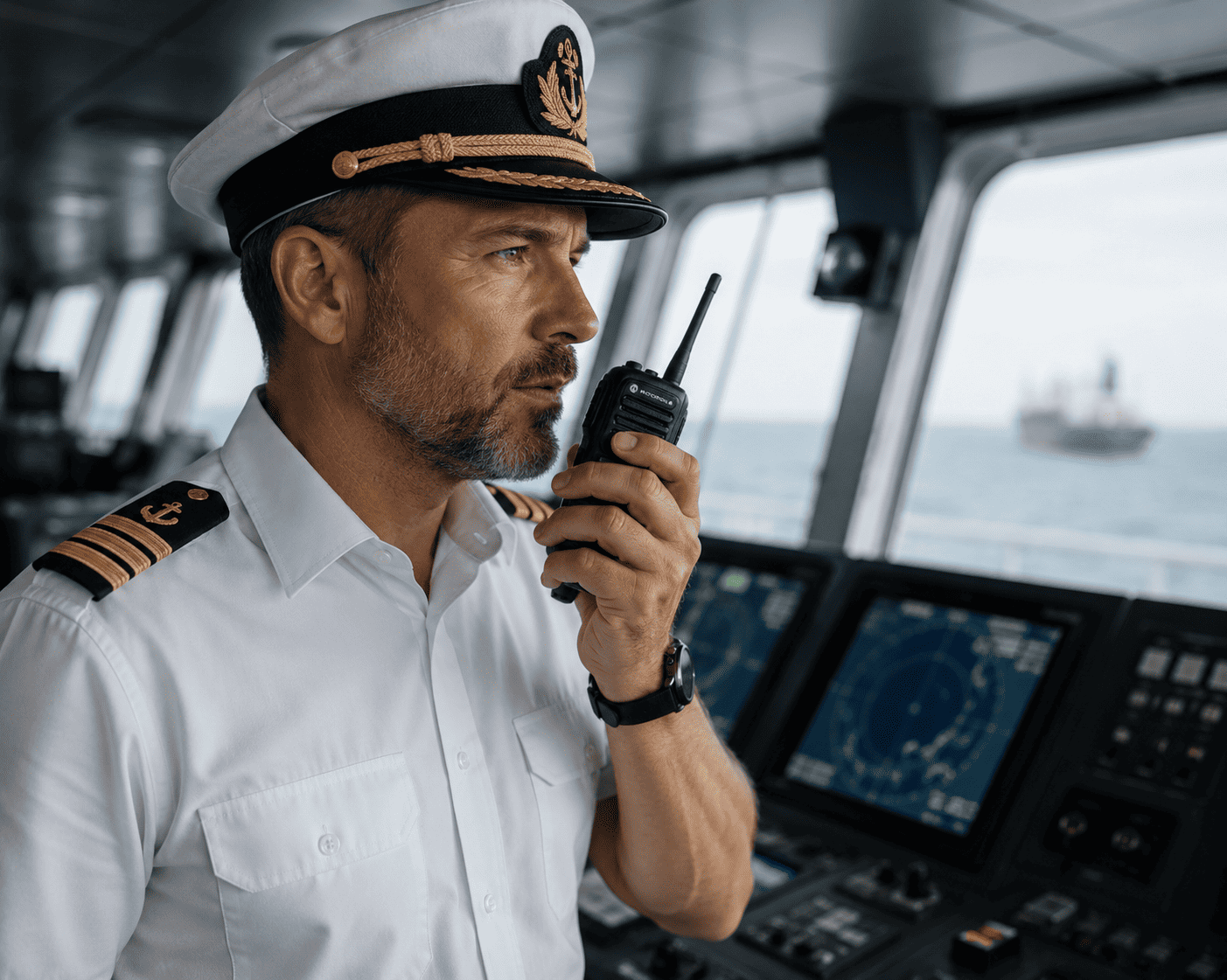
From busy commercial ports and working harbours to luxury superyachts, boats, ships and large-scale shipyards, DCS 2 Way Radio provides tailored marine radio and maritime communication systems designed around the needs of each operation. Our professional two way radios help crews, dockside teams, marine engineers and port operators communicate instantly, coordinate activities efficiently and respond quickly to changing conditions.
Whether you need boat radios, ship radios, vessel communication systems or professional radios for port and dockside teams, we can provide a solution suited to your working environment, from individual radio users to large-scale maritime operations
Maritime Communication Made Easy
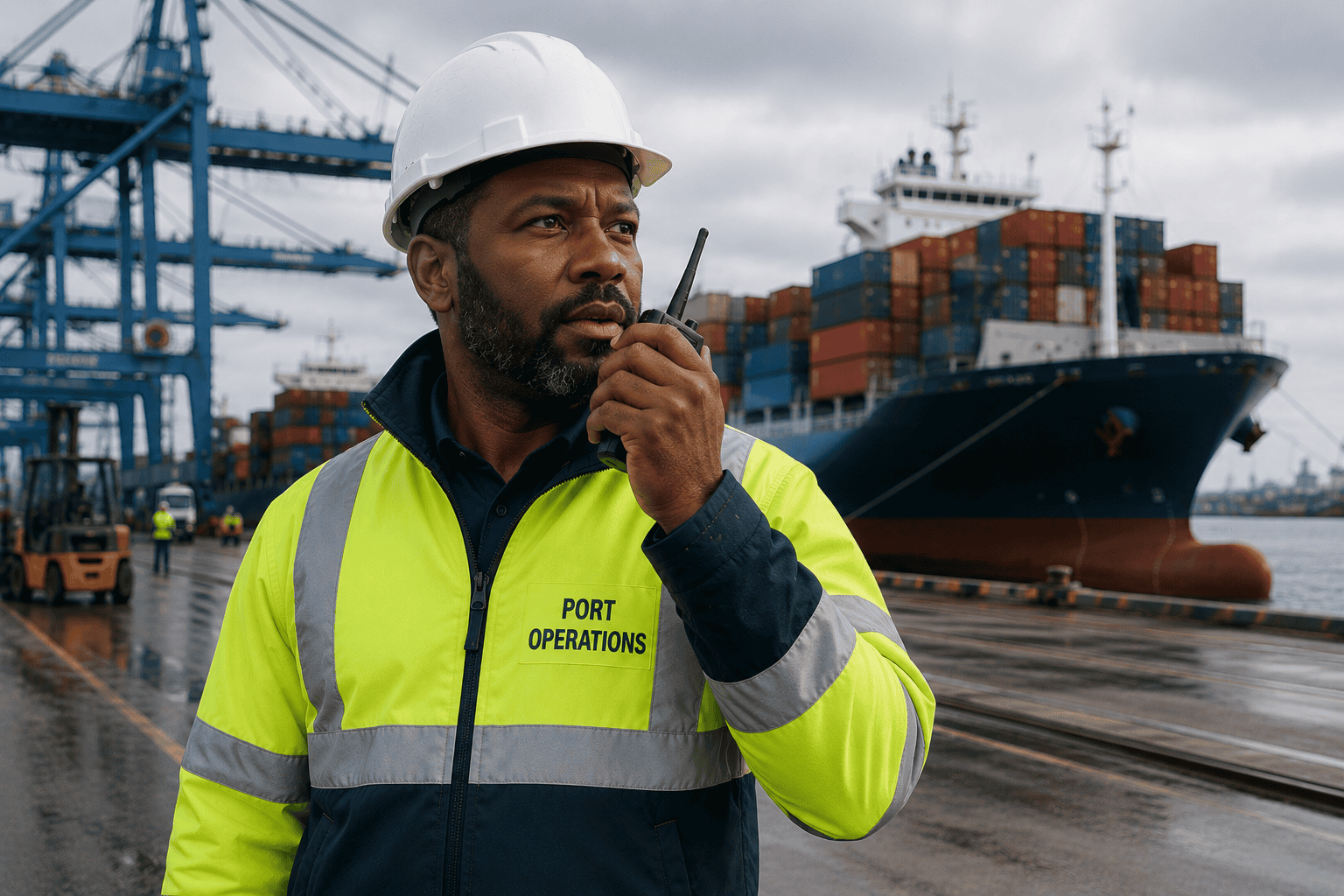
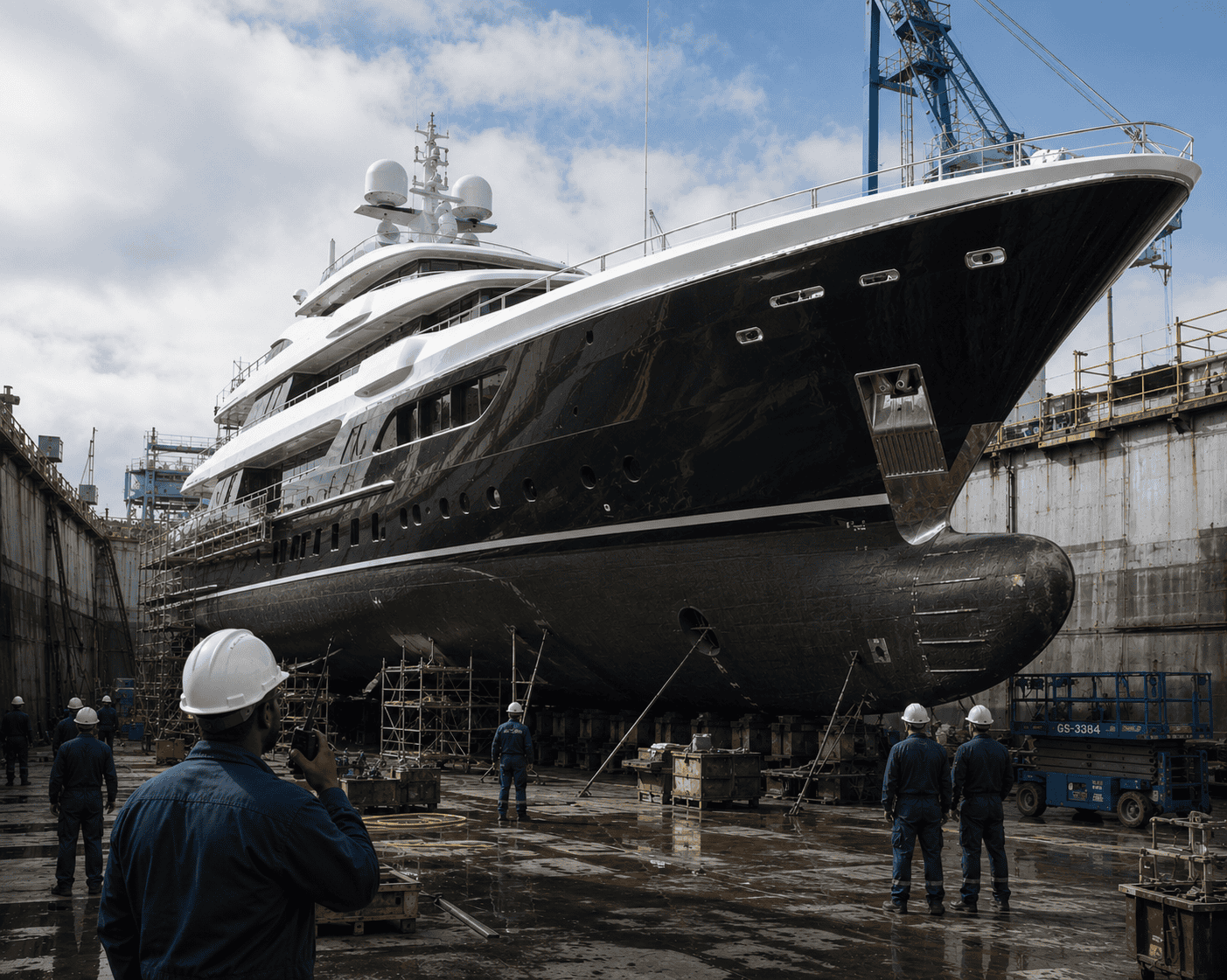


Reliable communication is essential across shipyards, docks and marine engineering facilities, where shipbuilders, engineers, crane operators, fabricators and dockside teams need to stay connected throughout the working day.
DCS 2 Way Radio supplies professional marine radios, boat radios and ship radios for maritime and marine operations, available to buy or hire for both short-term projects and long-term use. Our radio systems help improve coordination, safety and efficiency across busy shipyards, vessels and dockside operations.
Marine two way radios provide reliable, instant communication for shipyards, vessel crews, marine engineers and dockside teams. From coordinating crane and lifting operations to managing material deliveries and teams working across large vessels and shipyards, professional marine radio systems help teams communicate quickly and efficiently.
Marine radios are particularly valuable in large shipyards and maritime facilities, where teams are often spread across extensive sites, dry docks, vessels and waterfront operations. DCS 2 Way Radio provides marine and maritime radio solutions to help project managers coordinate construction activities, crane operators communicate with ground crews, and dockside teams respond quickly to changing requirements.
With instant push-to-talk communication, marine two way radios allow multiple users to communicate quickly without the delays of mobile phone calls. Whether managing fabrication, coordinating lifting operations, moving materials or preparing a vessel for launch and sea trials, reliable radio communication helps improve safety, reduce delays and keep maritime projects running efficiently.
In busy port environments, effective communication is essential to coordinate vessel arrivals, cargo handling operations, security teams and dockside personnel. With container movements, loading and unloading activities, and vehicle traffic taking place simultaneously, clear and reliable communication helps maintain safety and operational efficiency. Two way radios provide instant contact between port operators, harbour masters, crane operators and ground crews, ensuring critical information can be shared immediately. This helps reduce delays, improve coordination and keep port operations running smoothly around the clock.
Maritime Recommended Radios
Below are our recommended two way radios for boats, ships, vessels, shipyards, ports and docks. Designed to deliver exceptional performance in busy maritime environments, these radios provide reliable communication where it matters most.
MOTOTRBO R5 Digital Portable Two-Way Radio
Offering safe, reliable communications, the MOTOTRBO R5 Digital Portable RadioA Portable Radio is a battery-powered two-way radio designed to be carried and operated by an individual, providing mobile communication for professional and operational users. with screen and full keypad has been designed to meet the demanding requirements of maritime and shipyard teams. When clear communication between personnel is essential in fast-moving and high-pressure situations, the MOTOTRBO R5 delivers exceptional audio clarity and dependable performance, ensuring critical information is communicated quickly and accurately.
Features
- Digital and analogue operation
- Clear and reliable audio quality
- Dual-slot DMR capability
- Rugged MIL-STD 810 construction
- IP54/IP55 rated protection
- Voice announcementVoice Announcement is a two-way radio feature that provides spoken prompts to identify selected channels, talk groups or radio functions, helping users operate the radio without relying solely on its display. function
- Long-lasting battery life
ATEX & Intrinsically Safe Recommended Radios
Below are our recommended ATEX and intrinsically safe two way radios for organisations operating in hazardous environments such as ports, shipyards and maritime industries. Designed to deliver dependable performance whilst meeting stringent safety standards, these radios provide reliable communication where safety matters most.
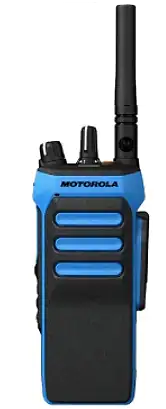
MOTOTRBO™ R7Ex ATEX Portable Radio
The MOTOTRBO™MOTOTRBO™ is Motorola Solutions' professional digital two-way radio platform, based on the DMR standard. It supports business communication ranging from simple radio systems to multi-site networks. R7Ex is an ATEX-certified and intrinsically safe two way radio designed for use in hazardous areas where flammable gases, vapours, combustible dusts or explosive atmospheres may be present.
Features
- ATEX & IECEx Certified Intrinsically Safe Design
- Approved for Use in Hazardous Areas
- AI-Powered Noise Suppression Technology
- Loud and Clear Audio up to 108 Phons
- Built-In GPS / GNSS Location Tracking
- Lone WorkerA Lone Worker is someone who works without direct supervision or immediate assistance nearby. Compatible two-way radios can provide safety features such as timed check-ins, emergency alerts and GPS location. & Fall Alert Safety Features
- Dedicated Emergency AlarmAn Emergency Alarm allows a two-way radio user to quickly alert a dispatcher, control room or other authorised users that assistance may be required. Button
- Bluetooth & Wi-FiWi-Fi is a wireless networking technology that connects compatible devices to a local or wider network. In radio systems, it can support programming, updates, data services and IP-based communications. Connectivity
- IP66 & IP68 Dustproof and Waterproof Protection
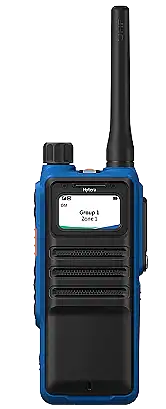
Hytera HP715Ex Intrinsically Safe Portable Radio
The Hytera HP715Ex is an ATEX-certified, intrinsically safe two-way radio designed for hazardous maritime environments where flammable gases, vapours, combustible dusts or explosive atmospheres may be present. Ideal for ports, shipyards, vessel construction, offshore operations, marine engineering and other hazardous areas, the HP715Ex provides reliable communication for teams working around fuel, machinery and other potentially hazardous environments. Combining exceptional audio quality, advanced safety features and rugged durability, this professional marine two-way radio helps keep shipbuilders, engineers, dockside teams and vessel crews connected when clear communication is critical.
Features
- ATEX & IECEx Certified Intrinsically Safe Design
- Approved for ZoneA Zone is a group of programmed radio channels or talk groups organised within a two-way radio. Zones make it easier for users to find and switch between different communication services. 1 & Zone 2 Hazardous Areas
- AI-Based Noise CancellationNoise Cancellation is technology used in two-way radios and communication equipment to reduce unwanted background noise and make speech easier to hear, particularly in noisy working environments. Technology
- Powerful 2-Watt Speaker for Loud, Clear Audio
- Lone Worker & Man DownMan Down is a safety feature on some professional two-way radios that can detect a possible fall or unusual radio position and automatically raise an alert if the user does not respond. Protection
- Built-In GPS / GNSS Location Tracking
- Dedicated Emergency Alarm Button
- Bluetooth 5.3, Wi-Fi & NFC Connectivity
Wide Area Digital Radio Networks
With decades of experience supplying marine radios and maritime communication systems to ports, shipyards, commercial vessels, boats and luxury superyachts, DCS 2 Way Radio provides reliable radio solutions for demanding marine environments. Our professional radio systems, available to buy or hire, provide clear and dependable communication for crews, dockside teams, shipbuilders and port operators.
For larger ports, shipyards and waterfront operations, our wide-area digital radio networks can provide extensive coverageRadio Coverage is the geographical area in which a two-way radio system can provide reliable communication. Coverage depends on the radios, antennas, frequency, terrain, buildings and system infrastructure. across large and complex sites. These systems help keep teams connected across ports, docks, shipyards and maritime facilities, supporting reliable communication where mobile phone coverage may be limited or inconsistent.
Reliable Coverage
Marine radios provide clear, instant communication across large ports, shipyards, dry docks and waterfront facilities. Keep vessel crews, marine engineers, crane operators and dockside teams connected wherever they are working
Buy or Hire Marine Radios
Whether you need radios for a short-term shipbuilding project, maritime event or permanent marine communication system, DCS 2 Way Radio can provide the right solution. Hire marine radios for temporary requirements or buy professional radios for long-term use.
Instant Communication
With instant push-to-talk communication, marine radios allow teams to share instructions, updates and safety information without the delays of mobile phones. Improve coordination during vessel construction, lifting operations, loading and unloading, and day-to-day port operations.
Built for Maritime Operations
From busy shipyards and commercial ports to boats, ships, vessels, marinas and superyachts, our two way radio systems are designed for demanding working environments. Choose reliable marine and maritime radios that help improve safety, efficiency and coordination across your operation.
Why DCS 2 Way Radio for Your Marine Operations
DCS 2 Way Radio has become a trusted communications partner for ports, shipyards and maritime organisations across the UK, supplying and supporting businesses that rely on clear, instant communication to keep critical operations running smoothly. From commercial ports and dock facilities to shipbuilders, offshore support vessels, boats, ships, marinas and luxury superyachts, we understand the communication challenges faced by the maritime sector and provide tailored solutions that improve safety, efficiency and operational control.
Unlike suppliers who simply sell equipment, DCS takes the time to understand how your operation works. Our experienced team can carry out a detailed site surveyA Site Survey is an assessment of a location to determine whether a two-way radio system will provide the required coverage, reliability and performance., assessing port facilities, shipyards, marinas, vessels and onboard environments to identify communication black spots, signal weaknesses and operational challenges. By understanding how your teams communicate across the site or vessel, we can recommend the most suitable radio systemA Radio System is a complete communication solution comprising two-way radios and, where required, equipment such as repeaters, antennas, base stations, mobile radios and network infrastructure. and infrastructureRadio infrastructure is the equipment and supporting systems behind a professional two-way radio network, including repeaters, antennas, base stations, network connections, power systems and dispatch equipment. to provide reliable coverage wherever it is needed.
We supply professional two way radios and communication equipment from leading manufacturers. Whether you require robust handheld radios for dockside operations, boat radios, ship radios, intrinsically safe radios for hazardous areas, vessel-wide communication systems or a wide-area digital radio networkA Network is a connected system of radios, equipment and infrastructure that allows users to communicate across a defined area. Radio networks can range from simple radio-to-radio systems to large multi-site networks. covering multiple locations, we will recommend a solution based on your operational requirements rather than a one-size-fits-all approach. Our goal is to provide reliable equipment and communication systems that deliver long-term value in demanding marine and maritime environments.
Frequently Asked Questions
What Are Dock Worker Walkie Talkies?
Dock worker walkie talkies are professional two-way radios used to provide instant communication between dock workers, supervisors, security teams, warehouse staff and other personnel operating around ports, docks and quaysides.
What Are the Best Two-Way Radios for Ports and Docks?
The best radio depends on the size and layout of the port, the working environment, the number of users and the coverage required. Professional digital two-way radios can provide clear audio, group communication and reliable coverage across busy ports, docks and shipyards.
Do Two-Way Radios Work Without Mobile Phone Signal?
Yes. Professional two-way radio systems can communicate directly between radios without relying on mobile phone networks. Where greater coverage is required, repeaters and wide-area radio networks can extend communication across larger ports, shipyards and maritime facilities.
What Two-Way Radios Are Used on Ships and Vessels?
The most suitable radio depends on the vessel, operating environment and communication requirements. Professional handheld two-way radios can provide instant communication for vessel crews, engineers and other onboard teams, while specialist marine radio equipment may be required for particular maritime applications.
Are Two-Way Radios Waterproof for Marine Use?
Some professional two-way radios are designed to withstand water, dust and demanding working conditions. The appropriate IP rating depends on the radio model and intended application, so equipment should be selected according to the environment in which it will be used.
Do Ports and Ships Need ATEX Two-Way Radios?
ATEX two-way radios may be required where radios are used in potentially explosive atmospheres, such as areas where flammable gases, vapours or combustible dust may be present. DCS 2 Way Radio can advise on suitable ATEX and intrinsically safe equipment for hazardous maritime environments.
What Are Intrinsically Safe Two-Way Radios?
Intrinsically safe two-way radios are specially designed to prevent the radio from creating an ignition source in hazardous environments. They are available in certified configurations for applications where explosive gases, vapours or dust may be present.
How Far Can Two-Way Radios Work Across a Port?
Radio range depends on factors including the size and layout of the port, buildingsAn antenna transmits and receives radio-frequency signals, allowing a two-way radio to communicate. Antenna type, frequency, height and location can all affect radio performance and coverage., vessels, terrain, radio powerAn antenna transmits and receives radio-frequency signals, allowing a two-way radio to communicate. Antenna type, frequency, height and location can all affect radio performance and coverage., antennas and any obstructions. For larger ports and maritime facilities, repeaters or wide-area digital radio networks can provide extended coverage.
Can Two-Way Radios Be Used Between Ships and Shore?
Yes, depending on the radio system, equipment and coverage required. Professional radio systems can be configured to provide communication between vessel crews and shore-based teams, helping coordinate port operations, shipyards and waterfront activities.
What Are the Best Two-Way Radios for Offshore Oil Rigs?
Offshore environments can require rugged, intrinsically safe or ATEX-certified two-way radios, depending on the operational and hazardous-area requirements. DCS 2 Way Radio can recommend suitable equipment based on the working environment, required coverage and certification requirements.
Can You Use Two-Way Radios on Yachts and Superyachts?
Yes. Professional two-way radios can provide instant communication between crew members, engineers, security personnel and other teams working onboard yachts and superyachts.
What Two-Way Radios Are Suitable for Fishing Boats?
The appropriate radio depends on the vessel, working environment and communication requirements. Professional handheld radios can provide reliable communication between crew members and teams working onboard or around the vessel.
Can Two-Way Radios Be Used on Oil Rigs and Offshore Platforms?
Yes, specialist radio systems can be used in offshore environments. Where hazardous areas are present, ATEX or intrinsically safe equipment may be required. DCS 2 Way Radio can advise on suitable radio equipment and communication infrastructure.
Can Two-Way Radios Provide Lone Worker Protection at Sea?
Some professional two-way radios include lone worker, man-down and emergency alert functions. These features can provide additional safety for personnel working alone or in isolated areas, depending on the radio system selected.
Can You Hire Two-Way Radios for Maritime Events and Operations?
Yes. DCS 2 Way Radio provides flexible two-way radio hireRadio Hire is the temporary rental of two-way radios and related communication equipment for events, projects and operational requirements, providing professional communication without purchasing the equipment. for temporary maritime operations, events, shipyard projects and other short-term requirements.
Can One Radio System Cover an Entire Port or Maritime Facility?
Yes, depending on the size and layout of the site. Larger ports and maritime facilities can use repeaters, additional infrastructure and wide-area digital radio networks to extend coverage across multiple operational areas.
Are UHF or VHF Radios Better for Maritime Operations?
The most suitable frequencyAn antenna transmits and receives radio-frequency signals, allowing a two-way radio to communicate. Antenna type, frequency, height and location can all affect radio performance and coverage. depends on the application, environment and coverage requirements. DCS 2 Way Radio can advise on the appropriate radio system based on where your teams work and how they need to communicate.
Can Two-Way Radios Be Used in Noisy Marine Environments?
Yes. Professional two-way radios can provide enhanced audio features and noise suppression designed to improve communication in demanding and noisy working environments such as shipyards, ports, docks and vessels.
Ports & Maritime Case Studies
Ports & Maritime case studies

Breakwater Logistics
Breakwater Logistics Case Study The Client Operating around the clock, effective communication is critical to maintaining safe vessel movements, efficient cargo handling and smooth day-to-day operations. With their existing radio equipment becoming outdated and…