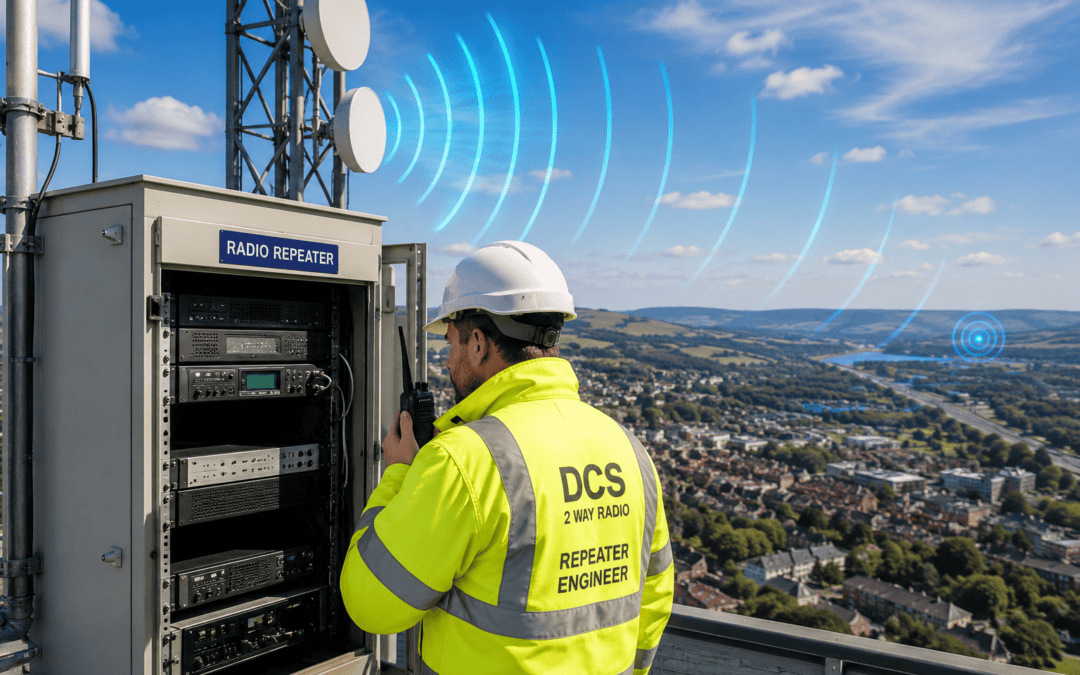
How dose a Radio Repeater work?
Two-way radio systems rely on radio waves to transmit messages between users. In ideal conditions, radio signals travel effectively across open spaces. However, buildingsAn antenna transmits and receives radio-frequency signals, allowing a two-way radio to communicate. Antenna type, frequency, height and location can all affect radio performance and coverage., hills, mountains and long distances can weaken or block signals, reducing both coverageRadio Coverage is the geographical area in which a two-way radio system can provide reliable communication. Coverage depends on the radios, antennas, frequency, terrain, buildings and system infrastructure. and audio quality.
This is where a radio repeaterA Repeater receives a two-way radio transmission and retransmits it, usually from an elevated location, to extend the coverage and reliability of a radio communication system. becomes invaluable.
How Does a Radio Repeater Work?
A radio repeater receives a radio transmissionTransmission is the process of sending voice, data or signalling from a radio using a radio-frequency signal to another radio, repeater or communication system. and immediately re-transmits it at a higher powerAn antenna transmits and receives radio-frequency signals, allowing a two-way radio to communicate. Antenna type, frequency, height and location can all affect radio performance and coverage. level. This process significantly extends the coverage area of a radio systemA Radio System is a complete communication solution comprising two-way radios and, where required, equipment such as repeaters, antennas, base stations, mobile radios and network infrastructure. and helps overcome obstacles that would otherwise block communication.
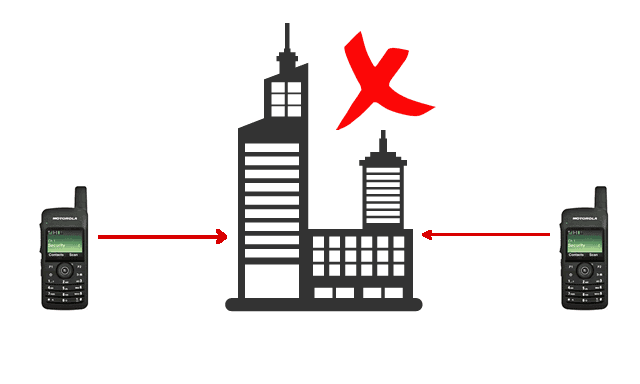
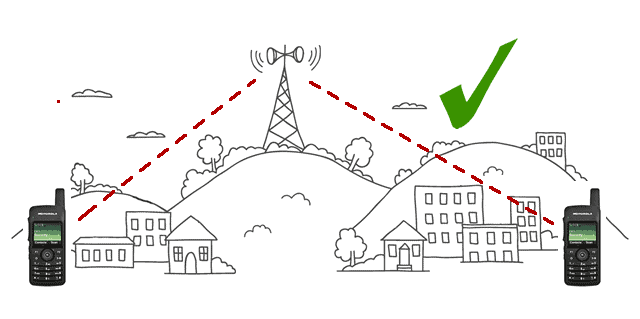
By boosting and re-broadcasting signals, repeaters enable radio users to communicate clearly even when they are separated by distance, buildings, difficult terrain or other obstructions.
To maximise coverage, repeater stations are typically installed at elevated locations such as:
- Tall buildings
- Communications towers
- Hilltops
- High rooftops
Positioning the repeater antennaAn antenna transmits and receives radio-frequency signals, allowing a two-way radio to communicate. Antenna type, frequency, height and location can all affect radio performance and coverage. above surrounding obstacles allows signals to travel much further than they could between radios alone.
Input and Output Frequencies
A repeater operates using two frequencies:
- Input FrequencyAn antenna transmits and receives radio-frequency signals, allowing a two-way radio to communicate. Antenna type, frequency, height and location can all affect radio performance and coverage. – the frequencyFrequency is the number of cycles a radio wave completes each second, measured in Hertz. In two-way radio, frequency determines where a transmission operates within the radio spectrum. used by radios to transmit to the repeater.
- Output Frequency – the frequency used by the repeater to transmit back to radio users.
When using a repeater system, radios are programmed to transmit on the repeater's input frequency and listen on its output frequency. This allows the repeater to receive and instantly re-broadcast every transmission.
Where Are Radio Repeaters Used?
Radio repeaters are widely used wherever reliable communications are required across large areas or challenging environments.
Common applications include:
- Commercial businesses
- Warehouses and distribution centres
- Hotels and large buildings
- Construction sites
- Public transport operators
- Emergency services
- Security companies
- Amateur radio networks
Even a large indoor facility can present coverage challenges due to steelwork, concrete structures and multiple floors. A repeater can dramatically improve communication throughout the site.
Modern Digital Repeater Technology
Today's digital repeaters offer outstanding performance, coverage and reliability.
Motorola's latest generation of repeaters includes solutions such as the:
- Motorola DR3000
- Motorola SLR5500
Both models are available in VHF and UHF versions, allowing businesses to choose the most suitable option for their operating environment.
Digital repeater technology provides improved audio quality, enhanced coverage and greater networkA Network is a connected system of radios, equipment and infrastructure that allows users to communicate across a defined area. Radio networks can range from simple radio-to-radio systems to large multi-site networks. efficiency compared to older analogue systems.
Repeater Maintenance and Support
Because the repeater is the heart of many radio systems, a failure can significantly impact business operations.
DCS 2 Way Radio offers repeater maintenance services with both business-hours and 24/7 support options. In the event of a fault, one of our engineers can attend site and replace the failed repeater with a loan unit, helping restore communications as quickly as possible and minimising costly downtime.
Need Advice on Radio Coverage?
Not every radio system requires a repeater, but if you're experiencing coverage issues or planning a system for a large site, our specialists can help.
Contact DCS 2 Way Radio on 0800 294 7766 for free expert advice on improving coverage and selecting the right radio solution for your business.