
Broadband
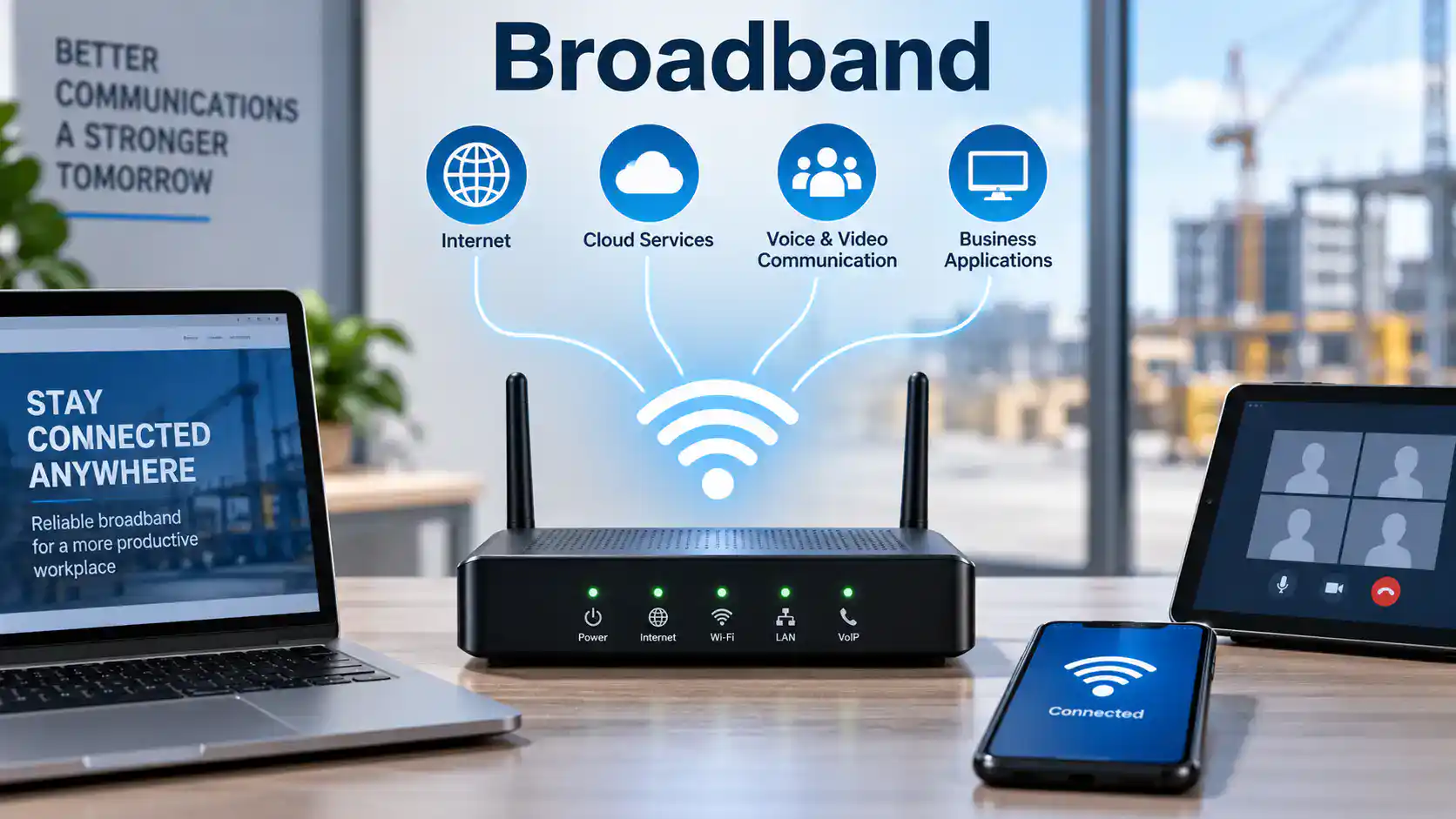
Broadband refers to a high-speed data connection capable of carrying digital information between devices and networks. In two-way radio communications, broadband connectivity can be used to carry voice, video, location data, messaging and other information over IP-based networks.
Broadband is particularly relevant to Push-to-Talk over Cellular (PoC)Push-to-Talk over Cellular (PoC) provides radio-style push-to-talk communication over cellular or IP networks, allowing users to communicate across wide areas where suitable network connectivity is available. and other network-based communication systems. These systems can use mobile networks such as 4G and 5G, Wi-FiWi-Fi is a wireless networking technology that connects compatible devices to a local or wider network. In radio systems, it can support programming, updates, data services and IP-based communications. or other internet connections to provide two-way communication over much greater geographical areas than a conventional local radio systemA Radio System is a complete communication solution comprising two-way radios and, where required, equipment such as repeaters, antennas, base stations, mobile radios and network infrastructure..
How is broadband used in two-way radio?
Traditional two-way radios communicate using radio frequencies. Depending on the system, radios may communicate directly with one another or use infrastructureRadio infrastructure is the equipment and supporting systems behind a professional two-way radio network, including repeaters, antennas, base stations, network connections, power systems and dispatch equipment. such as repeaters and radio sites to extend coverageRadio Coverage is the geographical area in which a two-way radio system can provide reliable communication. Coverage depends on the radios, antennas, frequency, terrain, buildings and system infrastructure..
Broadband-based radio systems work differently. The communication device connects to a broadband data networkA Network is a connected system of radios, equipment and infrastructure that allows users to communicate across a defined area. Radio networks can range from simple radio-to-radio systems to large multi-site networks., and voice communications are converted into digital data and transported through an IP network.
A simplified example is:
Radio/device → mobile network or Wi-Fi → IP network → other radio/device
This allows users in different geographical locations to communicate without needing to be within direct radio range of one another.
Broadband Push-to-Talk
Broadband Push-to-Talk (PTT)Push-to-Talk (PTT) is the button or control used to activate a two-way radio's transmitter. Press it to speak and release it to listen. uses broadband data networks to provide instant voice communication between individuals or groups.
Instead of transmitting directly from one radio to another over a dedicated radio frequencyAn antenna transmits and receives radio-frequency signals, allowing a two-way radio to communicate. Antenna type, frequency, height and location can all affect radio performance and coverage., the user’s voice is converted into digital data and transported through the network.
Broadband PTT can therefore provide communication between users who may be many miles apart, provided that suitable network coverage and service are available.
Broadband and PoC radio
Push-to-Talk over Cellular (PoC) is one of the most common applications of broadband connectivity in professional communications.
PoC devices can use cellular networks such as 4G and 5G to provide push-to-talk communication. Depending on the service, users may also have access to features such as:
- Group calling
- Individual calling
- GPS location
- Messaging
- Multimedia communication
- Worker status
- Emergency functions
- Dispatch and control-room features
The exact features available depend on the device and service provider.
Broadband vs traditional radio
Broadband communication and conventional two-way radio use different methods of delivering communications.
A traditional radio system can provide direct communication without depending on a mobile phone network or internet connection. This can make it particularly suitable for a defined site or operational area.
Broadband systems use an existing data network to transport communications. Their geographical coverage can therefore be much wider, but communication depends on the availability of the underlying network and service.
| Broadband communication | Traditional two-way radio |
|---|---|
| Uses IP/data networks | Uses radio frequencies |
| Can provide very wide geographical coverage | Coverage depends on radio system and infrastructure |
| Can use 4G, 5G or Wi-Fi | Can operate independently of cellular networks |
| Can support voice and other data services | Primarily designed for radio communications |
| Coverage depends on network availability | Coverage can be designed using radio infrastructure |
Neither approach is automatically better. The appropriate technology depends on the application, geographical area, environment and required level of resilience.
Broadband coverage
One of the major advantages of broadband-based communication is its potential geographical coverage.
A conventional handheld radio may be designed to communicate across a particular site or area. A broadband PTT device using a cellular network can potentially communicate across a much larger geographical area wherever the required mobile-data service is available.
However, broadband coverage should not be assumed to be universal.
BuildingsAn antenna transmits and receives radio-frequency signals, allowing a two-way radio to communicate. Antenna type, frequency, height and location can all affect radio performance and coverage., underground locations, remote areas, network congestion and other factors can affect mobile-data connectivity.
For critical communications, the actual coverage available in the locations where users will operate should be assessed.
Broadband and 4G and 5G
Broadband radio services can use mobile data networks such as 4G LTE and 5G.
The mobile network provides the data connection used to transport communication between the user’s device and the service platform.
5G can provide higher data capacity and potentially lower latencyLatency is the delay between a radio transmission being sent and the resulting voice or data being received. It can be introduced by digital processing, repeaters, IP networks, gateways and cloud systems. than previous generations of mobile technology, although the benefits available to a particular radio service depend on the device, network and service provider.
A broadband PTT system does not necessarily require 5G. Many services can operate effectively using 4G and other available data connections.
Broadband and Wi-Fi
Broadband communication does not have to use a cellular network.
Compatible communication devices can also use Wi-Fi where a suitable wireless network is available.
This can be useful in buildings, warehouses, offices and other locations with reliable Wi-Fi coverage.
Some systems can use different forms of connectivity and switch between them according to the available network, depending on the device and service.
Broadband and radio range
Broadband communication does not have a radio range in the same sense as a conventional two-way radio.
The geographical reach is primarily determined by the availability of the underlying data network and communication service.
For example, two users in different parts of the UK may be able to communicate through a broadband PTT service even though they are far beyond the direct radio range of conventional handheld radios.
The communication path is provided through the network rather than directly through the air between the two devices.
Broadband and latency
Latency is the delay between information being transmitted and received.
Broadband networks are generally capable of supporting real-time voice communication, but the delay experienced by a user can vary depending on the network, connection quality and communication service.
Professional PTT systems are designed to provide fast push-to-talk communication, but they may behave differently from a conventional radio system where the communication path is more direct.
Broadband radio resilience
A key consideration when using broadband for operational communications is dependence on the underlying network.
If a location has poor or no mobile-data coverage, a broadband PTT device may not be able to communicate normally.
This is one reason why organisations with critical communication requirements may use a combination of technologies.
For example, a business could use conventional two-way radio for local communications while using broadband PTT for users working across a wider geographical area.
Broadband and hybrid communication systems
Broadband and conventional radio technologies can also be combined.
A hybrid communicationHybrid Communication combines two or more communication technologies, such as two-way radio, DMR, cellular, Wi-Fi or IP networks, allowing different systems or users to communicate through a common platform. system can allow users on different technologies to communicate through suitable infrastructure or software.
For example, conventional DMR radios could be used by workers on a site while broadband-connected devices are used by field staff operating elsewhere.
Depending on the system architecture, these users may be connected through a central platform or gateway.
This can provide organisations with greater flexibility when employees operate across different environments.
Broadband and data services
One of the advantages of broadband connectivity is that it can carry more than voice.
Depending on the system, broadband-connected communication devices may support:
- Voice
- Text messaging
- GPS location
- Images
- Video
- Status information
- Emergency alerts
- TelemetryTelemetry is the automatic collection and transmission of information from a remote device, vehicle, machine or radio to another location for monitoring, analysis or control.
- Dispatch information
This makes broadband particularly relevant to modern workforce communication platforms where voice communication is only one part of the overall requirement.
Broadband and two-way radio hire
Broadband PTT devices can be useful for temporary operations where users need communication over a large geographical area without installing dedicated radio infrastructure.
They can be particularly suitable for organisations with mobile or distributed teams, provided reliable mobile-data coverage is available.
For site-based events and operations, conventional two-way radios may still be more appropriate where users require communication independent of the mobile network.
The choice between conventional radio, broadband PTT or a hybrid system depends on the operational requirements.
Choosing a broadband communication system
When considering a broadband-based radio or PTT solution, important factors include:
- Mobile network coverage
- 4G and 5G availability
- Wi-Fi availability where applicable
- Required geographical coverage
- Number of users
- Group size
- Required features
- Data requirements
- Network resilience
- Emergency communication requirements
- Integration with existing radio systems
- Subscription or service requirements
Broadband should therefore be considered as part of the complete communication system rather than simply as another name for a two-way radio network.
Broadband and professional communications
Broadband connectivity has expanded the capabilities available to professional two-way communication systems.
It allows push-to-talk communication to operate across large geographical areas and can provide additional data services that are difficult or impractical to deliver through a simple conventional radio system.
However, broadband and traditional radio solve different communication requirements. For many organisations, the most effective solution may be to combine technologies so that users have the appropriate communication method for the environment in which they are working.
DCS can advise on conventional two-way radio, broadband PTT and hybrid communication solutions based on the required coverage, environment and operational needs.