
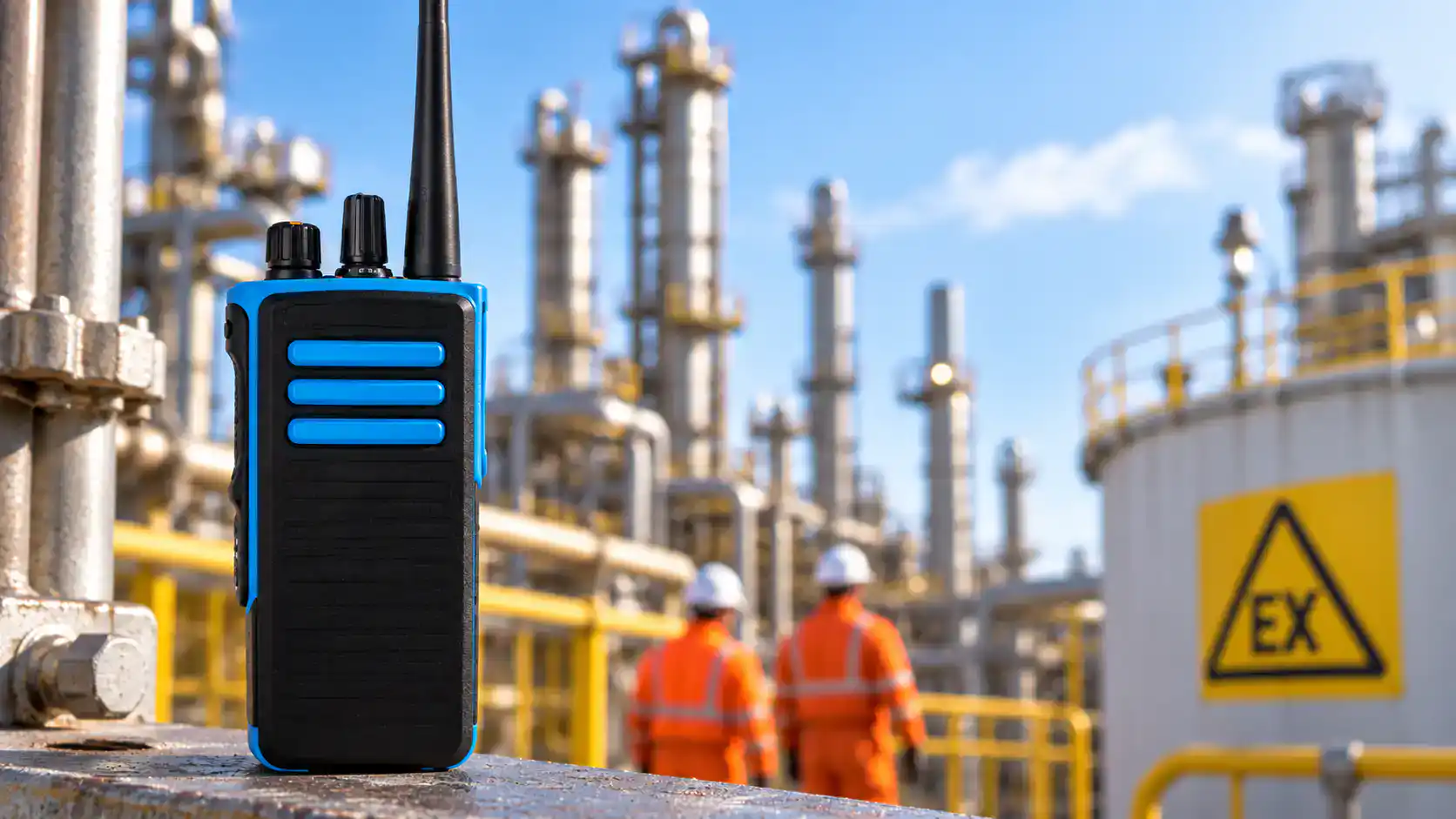
ATEX Radio
An ATEX radio is a two-way radio designed and certified for use in potentially explosive atmospheres. These radios are constructed so that, when used within their specified certification conditions, they minimise the risk of the radio becoming an ignition source.
ATEX is derived from the French term ATmosphères EXplosibles and refers to the European regulatory framework covering equipment and protective systems intended for use in potentially explosive atmospheres.
ATEX radios are commonly used in industries where flammable gases, vapours, mists or combustible dusts may be present, including oil and gas, petrochemical, chemical processing, manufacturing, utilities, pharmaceuticals and certain industrial environments.
Why are ATEX radios required?
A conventional electronic device can potentially produce an ignition source through electrical sparks, hot surfaces, static electricity or other forms of energy.
In an environment containing a potentially explosive concentration of flammable gas, vapour, mist or dust, an ignition source could result in a fire or explosion.
ATEX-certified radio equipment is specifically designed and assessed for use in defined hazardous environments. The radio’s construction and protection methods are intended to prevent its electrical or thermal characteristics from creating an unacceptable ignition risk when it is operated within its certification limits.
It is therefore important that an ATEX radio is selected according to the actual hazardous area in which it will be used.
What does ATEX mean?
ATEX is the name commonly used for European legislation concerning equipment and protective systems intended for use in potentially explosive atmospheres.
The requirements distinguish between different categories of equipment and different types of potentially explosive atmosphere.
For radio users, this means that simply buying a radio described as “ATEX” is not enough. The certification marking and technical specification must be appropriate for the particular hazardous environment.
ATEX zones
Hazardous areas are classified into zones according to the likelihood and duration of the presence of an explosive atmosphere.
For gases, vapours and mists, the commonly used zones are:
- ZoneA Zone is a group of programmed radio channels or talk groups organised within a two-way radio. Zones make it easier for users to find and switch between different communication services. 0 — an explosive atmosphere is present continuously, for long periods or frequently.
- Zone 1 — an explosive atmosphere is likely to occur occasionally during normal operation.
- Zone 2 — an explosive atmosphere is not likely to occur during normal operation, but if it does occur, it will exist only for a short period.
Combustible dust environments use a separate classification:
- Zone 20 — an explosive dust atmosphere is present continuously, for long periods or frequently.
- Zone 21 — an explosive dust atmosphere is likely to occur occasionally during normal operation.
- Zone 22 — an explosive dust atmosphere is not likely to occur during normal operation, but if it does occur, it will exist only for a short period.
The radio must have certification suitable for the relevant zone and the specific substances present.
ATEX radio certification
ATEX radios carry certification and marking that identifies the environments and conditions for which they have been assessed.
The certification can contain information relating to the equipment category, protection method, gas or dust group, temperature class and other characteristics.
These markings are technical and should be checked carefully when specifying equipment for a hazardous area.
An ATEX radio certified for one application should not automatically be assumed to be suitable for every potentially explosive environment.
ATEX radio temperature classes
Temperature is an important consideration in hazardous environments.
ATEX equipment can be assigned a temperature class that indicates the maximum surface temperature the equipment can reach under specified conditions.
For gas atmospheres, commonly encountered temperature classes include:
- T1 — maximum surface temperature of 450°C
- T2 — maximum surface temperature of 300°C
- T3 — maximum surface temperature of 200°C
- T4 — maximum surface temperature of 135°C
- T5 — maximum surface temperature of 100°C
- T6 — maximum surface temperature of 85°C
The required temperature class depends on the ignition temperature of the hazardous substance present. Equipment must be selected so that its permitted surface temperature is appropriate for the environment.
ATEX and intrinsically safe radios
Many hazardous-area radios use intrinsic safety as part of their protection concept.
An intrinsically safe radioAn Intrinsically Safe Radio is a two-way radio designed and certified for use in specified hazardous areas where flammable gases, vapours or combustible dust could create a risk of explosion. is designed to limit electrical and thermal energy so that it cannot produce an ignition-capable spark or temperature under the specified fault conditions.
Intrinsic safety is a technical protection method and is not simply another name for ATEX. ATEX certification can involve different protection concepts, and the certification of the individual radio determines exactly where and how it can be used.
ATEX radio batteries and accessories
ATEX certification applies to the complete approved equipment configuration, and this can include batteries and accessories.
A battery or audio accessoryAn audio accessory is an external device such as a speaker microphone, earpiece or headset that connects to a two-way radio to improve or adapt how users send and receive audio. that is suitable for a conventional version of a radio may not be suitable for its ATEX-certified equivalent.
Users should therefore only use batteries, chargers, remote speaker microphones, earpieces and other accessories that are approved for the particular ATEX radio and certification.
Using an incorrect accessory can invalidate the equipment’s certification or make it unsuitable for the hazardous environment.
ATEX radios in different industries
ATEX-certified two-way radios can be used in a wide range of industries where hazardous atmospheres may occur.
Examples include:
- Oil and gas
- Petrochemical facilities
- Chemical manufacturing
- Fuel storage and distribution
- Pharmaceutical manufacturing
- Food processing
- Paint and coatings
- Waste and recycling
- Utilities
- Industrial manufacturing
- Mining and related operations
The precise certification required varies according to the substances, processes and hazardous-area classification at the site.
ATEX radio communication
An ATEX radio provides the same basic push-to-talk function as other professional two-way radios, but with additional design and certification requirements for hazardous environments.
Depending on the radio model, ATEX-certified equipment may provide features such as group calling, emergency buttons, lone-worker functions, man-down alerts, remote speaker microphones and other professional communication features.
The availability of these features depends on the particular radio and its certification.
Can a normal two-way radio be used in an ATEX zone?
A standard two-way radio should not be used in an ATEX hazardous area unless it has the appropriate certification for that specific environment.
A conventional radio may contain electrical components capable of producing sparks or reaching temperatures that could create an ignition risk.
The fact that a radio operates at low voltage or has been used safely elsewhere does not make it suitable for an ATEX zone.
The equipment certification, hazardous-area classification and operating conditions must all be considered.
Choosing an ATEX radio
Selecting an ATEX radio requires more than choosing a radio with the required range or features.
Important considerations include:
- The hazardous-area zone
- Whether the hazard involves gas, vapour, mist or dust
- The substances present
- Required equipment group and category
- Temperature class
- Required protection method
- Radio frequencyAn antenna transmits and receives radio-frequency signals, allowing a two-way radio to communicate. Antenna type, frequency, height and location can all affect radio performance and coverage. and licensing requirements
- Required coverageRadio Coverage is the geographical area in which a two-way radio system can provide reliable communication. Coverage depends on the radios, antennas, frequency, terrain, buildings and system infrastructure.
- Required accessories
- Battery and charging arrangements
- Whether features such as lone workerA Lone Worker is someone who works without direct supervision or immediate assistance nearby. Compatible two-way radios can provide safety features such as timed check-ins, emergency alerts and GPS location. or man-down are required
The radio’s certification should always be checked against the site’s hazardous-area assessment and the manufacturer’s specifications.
ATEX radio hire
ATEX radios can be particularly useful where workers need temporary communication in hazardous environments, such as maintenance projects, shutdowns, construction work or specialist industrial operations.
Because certification requirements are specific, ATEX radio hireRadio Hire is the temporary rental of two-way radios and related communication equipment for events, projects and operational requirements, providing professional communication without purchasing the equipment. should be based on the actual hazardous-area requirements rather than simply supplying a radio described as intrinsically safe.
DCS can advise on suitable ATEX two-way radio equipment and accessories based on the working environment and communication requirements.