
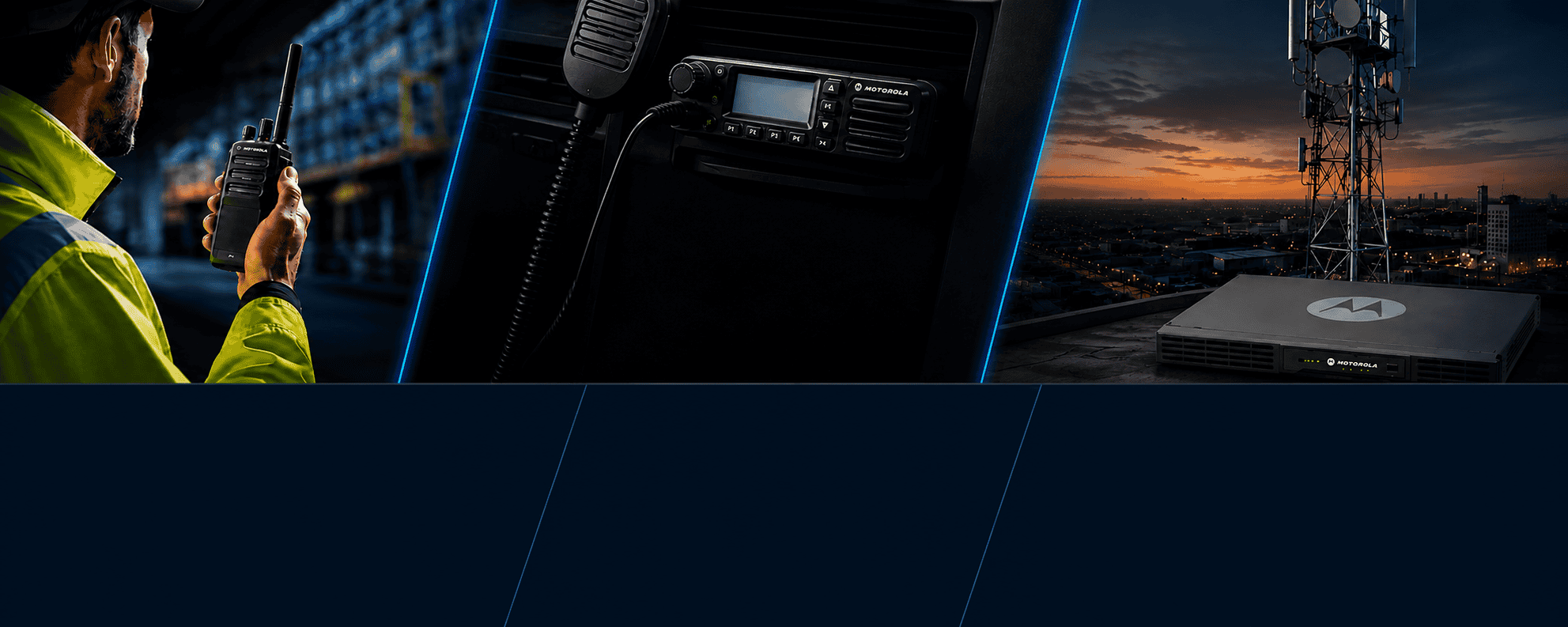
Professional Two Way Radio
OVER 50 YEARS COMBINED EXPERIENCE
Two Way Radio Systems for Business
Two way radio systems help your staff stay connected across buildings, vehicles and outdoor work areas. DCS helps UK businesses choose suitable radios, plan coverage and set up equipment. We also provide support as your team's needs change.
With push-to-talk calling, staff can speak to colleagues without dialling a number. For example, a supervisor can reach a whole team with one call. This helps people share updates and coordinate work throughout the day.

Your two-way radio system might use handheld radios, vehicle radios or repeaters to extend coverage. First, tell us where your team works and who needs contact. We can then help you choose equipment that suits the site, users and tasks.
Whether you need your first radios or want to improve an existing system, speak to DCS about the next step.
Contact The UK's Premier Two Way Radio Experts Today
Two-Way Radio Systems Built Around Your Business
The right equipment depends on how your business works. A small team may need a few handhelds. However, a large site may need vehicle radios, repeaters and separate channels for each department.
DCS helps plan two way radio systems around your users and working areas. Depending on your needs, your setup may include:
- Digital handheld two-way radios
- Vehicle-mounted or fixed mobile radios
- Digital radio repeaters to extend coverage
- Separate channels or talkgroups for different teams
- Radio programming and configuration
- Earpieces, speaker microphones and specialist accessories
- Appropriate Ofcom licensing
- Coverage planning and system infrastructure
- Integration with existing radio equipment
- Ongoing technical support
We also consider future changes. For example, you may want to add users or cover another building later.
Choosing the Right Two-Way Radio System
No single two-way radio system is right for every business. The equipment and infrastructure you need will depend on your working environment, coverage requirements, number of users and how your teams communicate.
Before recommending a system, there are several important factors to consider.

Coverage and Operating Area
Radio coverage can vary significantly depending on the environment. Buildings, steel structures, concrete walls, racking, machinery, terrain and the overall size of a site can all affect radio performance.
A smaller workplace may achieve the required coverage using handheld radios alone, while larger or more challenging sites may require digital repeaters or additional infrastructure to provide reliable communication throughout the operating area.
Number of Users and Teams
How many people need radios? Also, decide who needs to speak to whom. Separate channels can help departments work without hearing every call from other teams.
Working Environment
Choose equipment that suits the job. For example, outdoor teams may need radios with suitable dust and water protection. Hazardous areas require equipment with certification appropriate to the location.
Where potentially explosive atmospheres are present, appropriately certified ATEX two-way radios may be required.
Handheld, Mobile or Fixed Communications
Handhelds suit staff moving around a site. Vehicle radios connect drivers, while fixed units can serve control points. Business radio systems can combine these options.
Battery Life and Shift Patterns
Check shift length, call use and charging access. For longer shifts, consider spare batteries or extra chargers. Battery performance depends on the model and how staff use it.
Licensing and Frequencies
Some radios need an Ofcom licence; suitable licence-free options are also available. DCS can help assess the equipment and licensing arrangements your operation needs.
Future Expansion
Plan for changes in staff, vehicles and buildings. This helps you assess how the system could grow before choosing equipment.
Digital Handheld Two-Way Radios
Handheld radios give staff portable push-to-talk contact. They suit teams in warehouses, construction, security, hospitality and other busy workplaces.
Choose the size and features around the user. For example, a hotel team may prefer compact radios. An industrial team may need tougher equipment and controls they can use with gloves.
Some models offer emergency alerts, location tools or text messages. However, features vary by device and system. We can help you assess which options your team needs.
Handhelds can also work with mobile radios and repeaters as part of wider two way radio systems.
Digital Mobile Two-Way Radios
Digital mobile two-way radios provide powerful, reliable communication for vehicles, control rooms and fixed operating locations. Unlike handheld radios, mobile radios are typically installed directly into a vehicle or workplace and can provide greater transmission power when used with an appropriate external antenna.
They are particularly useful for businesses with vehicle fleets or teams operating across larger sites where dependable communication between drivers, mobile workers and a central control point is essential.
Digital mobile radios are commonly used within:
- Transport and logistics fleets
- Construction and plant vehicles
- Airports and ground operations
- Ports and maritime environments
- Utilities and infrastructure
- Security operations
- Agricultural vehicles and machinery
- Control rooms and dispatch centres
A mobile radio system can allow drivers and operators to communicate instantly with colleagues without needing to handle a portable radio or make a mobile phone call. Equipment can be programmed with channels or talkgroups appropriate to the operation, helping different teams communicate efficiently across a shared radio network.
Mobile radios can also form part of a larger commercial two-way radio system, operating alongside handheld radios and digital repeaters. This allows employees in vehicles, personnel working around a site and staff based in a control room to communicate through the same coordinated system.
For organisations operating fleets or covering substantial working areas, DCS can help specify suitable mobile radios, antennas, programming and supporting infrastructure based on the vehicles, operating environment and required coverage.
Explore Digital Mobile Radios
Discover professional digital mobile radio solutions for vehicles, fleets, control rooms and business communications.
Digital Radio Repeaters
A repeater receives a radio signal and sends it on. This can help reach areas where radios cannot communicate directly.
For example, a warehouse may have weak spots behind dense racking. A large site may also need coverage between several buildings. Repeaters can form part of two way radio systems designed for these challenges.
The right setup depends on the site, antenna position and frequencies. Therefore, assess real working areas rather than relying on a quoted range alone.
DCS can help assess suitable repeaters and compatible equipment for your operation.
Explore Digital Radio Repeaters
Discover professional digital repeater solutions designed to extend radio coverage, improve system capacity and support reliable business communications.
ATEX Two-Way Radios
Some working environments require communication equipment specifically designed for use in potentially explosive atmospheres. ATEX two-way radios provide professional communications for businesses operating in areas where flammable gases, vapours, dust or other hazardous materials may create an ignition risk.
Unlike standard commercial radios, ATEX-certified equipment is designed and tested to meet specific safety requirements for use within designated hazardous areas.
ATEX two-way radios are commonly used within:
- Oil and gas operations
- Petrochemical facilities
- Chemical processing
- Fuel storage and distribution
- Utilities and energy
- Pharmaceutical manufacturing
- Industrial processing
- Ports and marine operations
- Certain manufacturing environments
- Sites where combustible dust may be present
Selecting the correct ATEX radio requires more than choosing a rugged handset. Equipment must be appropriate for the hazardous area classification and operating environment in which it will be used.
Accessories are also important. Batteries, earpieces, speaker microphones and other equipment used with an ATEX radio may need the appropriate certification to maintain the integrity of the overall solution.
ATEX radios can form part of a wider professional two-way radio system, incorporating compatible infrastructure, repeaters and appropriately configured channels or talkgroups where required.
DCS can help businesses identify suitable ATEX-certified radio equipment based on their communication requirements and working environment, while ensuring the proposed system integrates effectively with the wider operation.
Explore ATEX Two-Way Radios
Discover professional ATEX two-way radio solutions for hazardous and potentially explosive working environments.
Nationwide Radio Communications
Traditional two-way radio systems are ideal for communication across defined sites, buildings and operational areas. But some businesses need their teams to communicate across towns, regions or throughout the UK.
Nationwide radio provides an alternative for organisations with geographically dispersed employees, allowing teams to communicate instantly over much greater distances than would normally be possible with a conventional radio system.
Using mobile data networks rather than relying solely on traditional radio frequencies, nationwide radio systems can provide push-to-talk communication between users located across different sites and regions.
This makes nationwide communications particularly useful for:
- Transport and logistics operations
- Haulage and distribution fleets
- Field service teams
- Utilities and infrastructure
- Security companies
- Facilities management
- Construction businesses operating across multiple sites
- Organisations with regional offices or depots
- Mobile engineers and maintenance teams
- Businesses managing a geographically dispersed workforce
Users retain the simplicity of radio communication - press a button and speak - while gaining the ability to communicate with colleagues located far beyond the range of a conventional site-based radio network.
Nationwide systems can also provide additional functionality depending on the equipment and platform used, including GPS location services, individual and group calling, dispatcher functionality and centralised management.
For businesses operating from multiple locations, this can create a single communication network connecting drivers, field workers, depots, offices and operational teams across the UK.
Conventional professional two-way radios and nationwide radio systems solve different communication challenges. DCS can help determine which approach - or combination of technologies - is most appropriate based on where your teams operate and how they need to communicate.
Explore Nationwide Radio
Discover nationwide radio solutions for businesses that need instant communication between teams working across multiple sites, regions or throughout the UK.
Two-Way Radio Hire
Not every business needs to purchase its own radio equipment. Two-way radio hire provides a flexible way to access professional communication equipment for temporary projects, events, seasonal requirements or periods when additional radios are needed.
Radio hire can be particularly useful for:
- Events and festivals
- Construction and infrastructure projects
- Temporary sites and operations
- Security requirements
- Seasonal increases in staffing
- Additional radios during busy periods
- Short-term contracts
- Emergency or replacement communication requirements
DCS can provide anything from a small number of handheld radios to larger temporary communication systems incorporating accessories, chargers, repeaters and other supporting equipment.
Hire radios can be programmed and configured before delivery, helping ensure equipment arrives ready for your teams to use. Where required, we can also advise on coverage, radio quantities, accessories and licensing based on the operation involved.
Short-term hire can avoid the cost of purchasing equipment that may only be required occasionally, while longer-term radio hire can provide businesses with access to professional equipment without the upfront investment associated with owning a complete radio fleet.
Whether you need additional radios for a few days or a communication system for a longer project, the equipment can be configured around the number of users, working environment and coverage requirements involved.
Explore Two-Way Radio Hire
Discover flexible professional radio hire for businesses, events and temporary operations, with nationwide delivery and equipment configured around your requirements.
How Far Do Two-Way Radios Work?
One of the most common questions when choosing a two-way radio system is how far the radios will communicate. There is no single distance that applies to every radio or working environment.
The effective range of a professional two-way radio depends on several factors, including the radio equipment, frequency, terrain, buildings, antenna position and obstacles between users.
Buildings and Structures
Concrete, steel, machinery and racking can weaken signals. As a result, indoor coverage can differ between rooms, floors and buildings.
Terrain and Outdoor Environments
Hills and other obstacles can block signals. Open ground may offer better coverage, but assess the actual route or work area.
Radio Power and Antennas
Equipment and antenna position affect coverage. For example, a well-placed external antenna may help a vehicle or fixed radio reach other users.
Repeaters and Radio Infrastructure
Repeaters can help extend coverage where direct calls fall short. Their location and setup matter, so they should form part of the coverage plan.
Coverage Should Be Designed Around the Site
Ask whether staff can make clear calls where they work. For larger or difficult sites, discuss testing or a coverage assessment before agreeing the full system.
For business-critical communications, the important question isn't simply “How many miles will this radio work?” but whether the radio system will provide dependable communication in the places where your employees actually need it.
DCS can help assess the operating environment and recommend appropriate radios, antennas, repeaters and infrastructure based on the required coverage area.
For larger or more complex operations, coverage planning or site testing can help identify potential weak areas before a complete two-way radio system is deployed.
Two-Way Radio Licensing and Ofcom
Professional two-way radios in the UK may require an Ofcom radio licence, depending on the frequencies and type of equipment being used. Choosing between licensed and licence-free radios is an important part of specifying the right communication system for a business.
Licensed Two-Way Radios
Licensed professional radios operate on frequencies authorised for business radio use by Ofcom. They are commonly used where organisations require greater control over their communications, more powerful equipment or a radio system designed around a particular site or operation.
Licensed systems can be suitable for everything from relatively straightforward handheld radio fleets to larger communication networks incorporating mobile radios, repeaters and supporting infrastructure.
Licence-Free Two-Way Radios
Licence-free radios can be used without obtaining an individual Ofcom radio licence and may provide a practical solution for smaller or less demanding communication requirements.
However, licence-free frequencies are shared with other users and the equipment operates within specific technical limitations. This means they may not always be the most appropriate choice for businesses where coverage, capacity or dependable communications are operationally important.
Which Type Does Your Business Need?
The decision shouldn't be based on licensing alone. The correct option depends on factors such as:
-
Size and layout of the operating area
-
Required radio coverage
-
Number of users
-
Number of teams or departments
-
Buildings and physical obstructions
-
Requirement for repeaters or additional infrastructure
-
Type of radios being used
-
Importance of the communication system to the operation
DCS can advise on suitable radio equipment and licensing options as part of the design of a professional two-way radio system, helping ensure the solution is appropriate for both the technical requirements and the way your organisation operates.
Where licensing is required, we can also help businesses understand the options available and ensure the radio system is configured for the appropriate frequencies.
Two-Way Radios for Business and Industry
Professional two-way radio systems are used across a wide range of industries, but the communication requirements of each operation can be very different.
A warehouse may need reliable communication between supervisors, forklift drivers and loading teams across racking and distribution areas, while a construction site may need rugged radios connecting site management, contractors and safety personnel. Airports, ports, manufacturing facilities, security operations and hospitality venues each present their own challenges around coverage, users, working environments and operational safety.
DCS provides professional two-way radio solutions for businesses across the UK, with systems configured around the way each organisation operates.
Explore our industry solutions to see how two-way radio systems can support communication, coordination and safety within your sector.
Two-Way Radio Solutions in Practice
See how DCS 2 Way Radio provides professional walkie talkie hire for events, productions and businesses, with radio systems configured around the people, site and operational requirements involved.
Wilmslow Running Festival
Reliable radio communications helped event teams, volunteers and organisers stay connected across a busy public event involving thousands of runners and spectators.
View Case Study →Winnersh Film Studios
DCS supplied a substantial temporary radio system to keep multiple production teams connected across the film studio operation.
View Case Study →Cranmore Veterinary Surgery
Professional digital radios provided on hire give staff a fast, reliable way to communicate across different areas of the practice.
View Case Study →Two Way Radio Systems FAQs
What Is a Two Way Radio?
A two way radio lets users send and receive voice calls. Press the push-to-talk button to speak, then release it to listen. Staff on the same channel can hear the call without dialling a number.
How Do Two Way Radios Work?
Conventional radios send voice over radio frequencies. Two way radio systems may connect users directly or through repeaters. Nationwide PoC radios instead carry calls over mobile data or Wi-Fi.
Can I hire two-way radios?
Yes, we provide professional two-way radio hire across the UK for events, businesses, construction projects and short- or long-term requirements. Radios can be supplied with batteries, chargers and accessories, with equipment configured to suit your specific communication needs.
Can I Hire Two-Way Radios?
Yes. DCS offers hire for businesses, events and projects. Tell us your dates, location and user numbers. We can then discuss suitable radios, accessories and any coverage equipment needed.
What Are the Benefits of Using Two Way Radios?
Radios make it easy to reach colleagues quickly. Group calls help staff share updates and coordinate tasks. However, the benefits depend on choosing suitable equipment and providing coverage where people work.
What Is the Difference Between Digital and Analogue Two Way Radios?
Both carry voice calls. Digital models may also offer text messages, location tools and safety alerts. Features vary, so check the device and system. If you use analogue radios already, ask about compatibility before upgrading.
Do I Need a Licence to Use a Two Way Radio?
Not always. Licence-free radios are available for smaller sites and lighter-duty applications. However, businesses requiring greater coverage, improved reliability and reduced interference often choose licensed radio systems. Our team can advise on the most suitable option and assist with Ofcom licensing if required.
How Far Can Two Way Radios Communicate?
The range of a two way radio depends on factors such as terrain, buildings, radio type and whether a repeater system is being used. On open ground, radios can communicate over several kilometres, while urban environments may reduce coverage. Repeaters can significantly extend radio coverage where required.
Do Two Way Radios Work Inside Buildings?
Yes. Professional two way radios are widely used in warehouses, factories, shopping centres, hotels, hospitals and office buildings. Coverage depends on the size and construction of the building, but modern digital radio systems can provide excellent indoor communication. Where additional coverage is needed, repeater systems can be installed to improve performance.
Can Two Way Radios Improve Workplace Safety?
Yes. Two way radios allow staff to communicate instantly during emergencies, report incidents quickly and coordinate responses more effectively. Many modern digital radios also include features such as emergency buttons, lone worker monitoring and man-down alerts, helping organisations improve safety and respond quickly when assistance is required.
Can Two Way Radios Be Used on Construction Sites?
Yes. Professional two way radios are widely used on construction sites to improve communication between site managers, contractors, machine operators and safety personnel. Rugged digital radios are designed to withstand demanding working environments and can help improve both productivity and site safety.
What Is the Best Two Way Radio for Business Use?
The best two way radio depends on your working environment, coverage requirements, number of users and operational needs. Construction sites, warehouses, security teams, hospitality venues and manufacturing facilities often require different types of radio systems. Our team can help identify the most suitable solution based on your specific requirements.